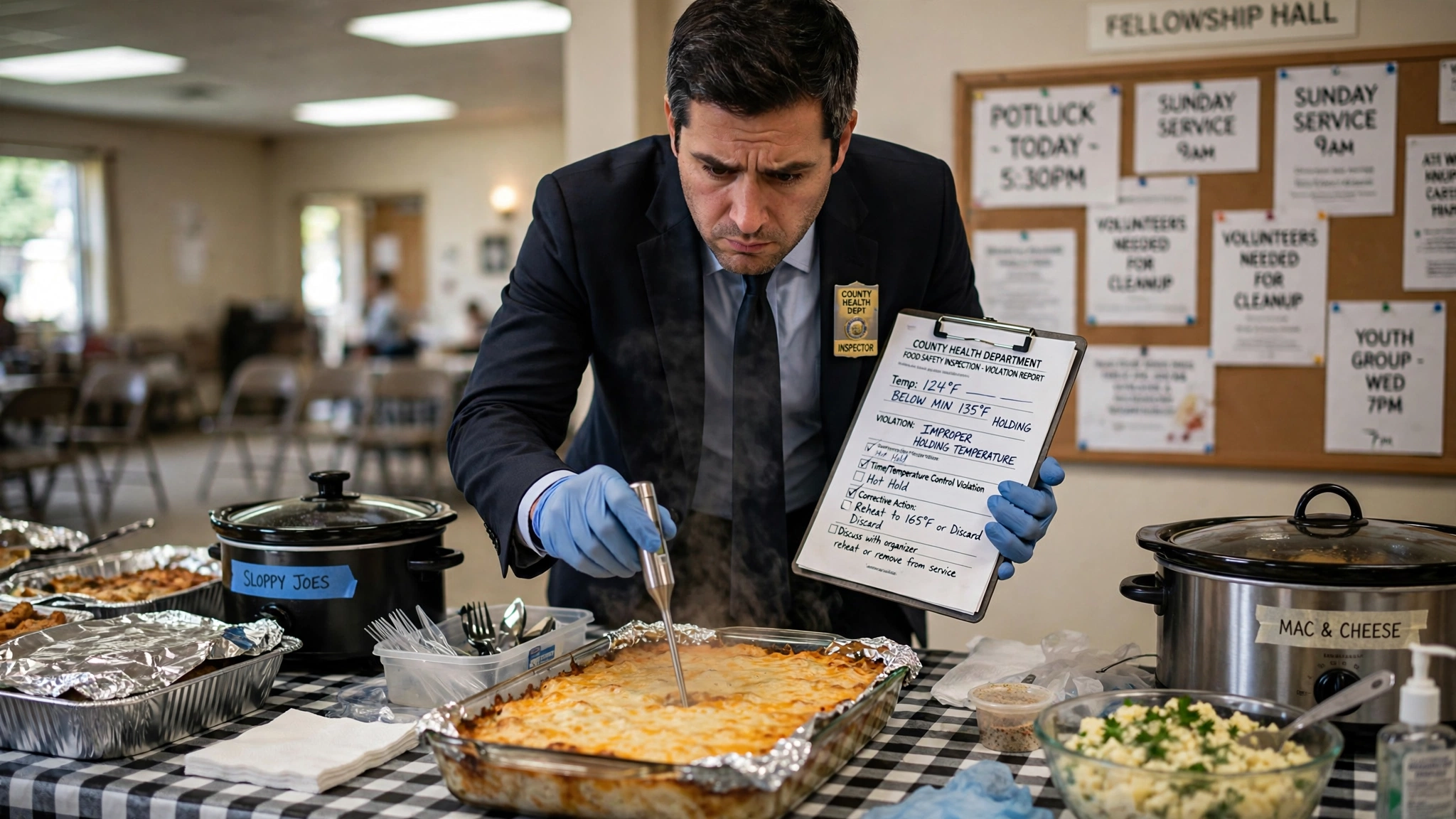
I. The Statutory Framework
The FDA Model Food Code is not, strictly speaking, federal law. It is model legislation—a comprehensive, science-based regulatory framework developed by the Food and Drug Administration, updated every four years, and offered to state, local, tribal, and territorial jurisdictions as a template for their own food safety regulations. As of the 2022 edition, all fifty states, the District of Columbia, and six territories have adopted the Food Code in whole or in part as the basis for their retail food protection programs.1
The Code’s definitional architecture is, like most regulatory definitions designed to protect public health, broad. Section 1-201.10(B)(31) defines “food establishment” as “an operation that stores, prepares, packages, serves, vends food directly to the consumer, or otherwise provides food for human consumption.”2 The definition then offers illustrative examples: “a restaurant; satellite or catered feeding location; catering operation if the operation provides food directly to a consumer; market; vending location; conveyance used to transport people; institution; or food bank.”
This is a functional test. The Code does not require a permanent physical structure. It does not require a commercial lease. It does not require a profit motive. It does not require that the operator identify as a food service professional. It requires only that the operation store, prepare, or serve food for human consumption. The question is not what the operator calls the operation. The question is what the operation does.
There is a private home kitchen exemption. Section 1-201.10(B)(31) excludes from the definition “a kitchen in a private home if only food that is not time/temperature control for safety food is sold or offered for sale.”2 The exemption is precise. It applies only to food that does not require temperature control to prevent the growth of pathogenic microorganisms. A cookie qualifies. A brownie qualifies. A casserole containing ground beef, cream of mushroom soup, and shredded cheddar cheese held at an ambient temperature of 72°F on a folding table in a church fellowship hall does not.
II. The Food Establishment
A potluck dinner is an event at which multiple individuals each prepare a dish of food in their respective home kitchens and transport those dishes to a communal location, where the dishes are arranged on a shared surface and served directly to attendees who consume the food on the premises. The event stores food. It serves food. It provides food for human consumption. It meets every functional element of the Food Code’s definition of a food establishment.
It is, more precisely, a multi-vendor food establishment. Each contributing household operates as an independent production facility supplying finished food products to a central distribution point. The event therefore combines the regulatory complexity of a food court—multiple independent kitchens, each producing different menu items, with different ingredients, different preparation methods, different allergen profiles, and different contamination risks—with the regulatory oversight of a picnic blanket. A food court in a shopping mall requires each vendor to maintain a separate food service license, a certified food protection manager, temperature control equipment, handwashing facilities, and regular health department inspections. A potluck dinner in the same zip code requires a folding table.
The potluck is among the oldest communal feeding traditions in the United States. The word itself entered English in the sixteenth century, from the phrase “pot luck”—whatever food happened to be in the pot. The modern American potluck, in which each attendee contributes a dish, became a fixture of church, community, and workplace culture in the nineteenth and twentieth centuries. The tradition is vast. There are approximately 380,000 religious congregations in the United States, according to the National Congregations Study.3 A substantial proportion hold communal meals—potluck suppers, fellowship dinners, Lenten fish fries, Easter brunches, Iftar meals, kiddush luncheons—on a regular or seasonal basis. Add workplace potlucks, block parties, family reunions, school events, book clubs, and neighborhood gatherings, and the number of potluck events held annually in the United States reaches into the tens of millions. Not one has applied for a food service permit.
III. The Temperature Control Catastrophe
The single most important variable in food safety is temperature. The FDA Food Code addresses this with the concept of “time/temperature control for safety food,” or TCS food—previously known as “potentially hazardous food.” A TCS food is any food that requires time and temperature control to limit the growth of pathogenic microorganisms or the production of toxins. The category includes, under § 1-201.10(B)(86), cooked meats, cooked rice, cooked pasta, dairy products, cut melons, cut leafy greens, cut tomatoes, raw seed sprouts, garlic-in-oil mixtures, and any food of animal origin that is raw, cooked, or heat-treated.2
The list describes, with some precision, the contents of every potluck buffet table in America.
Under § 3-501.16 of the Food Code, TCS food must be maintained at a temperature of 135°F (57°C) or above, or at 41°F (5°C) or below.2 The range between these two temperatures—41°F to 135°F—is known in food safety as the “danger zone,” the thermal band in which pathogenic bacteria including Salmonella, Clostridium perfringens, Staphylococcus aureus, and Escherichia coli O157:H7 can double in population every twenty minutes under optimal conditions.4 The USDA’s Food Safety and Inspection Service uses a marginally different range of 40°F to 140°F, but the regulatory intent is identical: food in this range is growing bacteria.
The Food Code provides a limited exception for time as a public health control. Under § 3-501.19, food may be held in the danger zone for up to four hours if the food was initially at a proper temperature, the four-hour window is not exceeded, and the food is discarded at the end of that period.2 This provision requires monitoring—someone must record the time the food left temperature control and ensure disposal at the four-hour mark.
Consider, now, the life cycle of a potluck casserole. The dish is removed from a home oven at approximately 350°F. It is placed on a kitchen counter to cool while the cook changes clothes. It is carried to a car, where the ambient temperature is approximately 85°F in summer or 40°F in winter, neither of which is a compliant holding temperature for a hot TCS food. It travels for five to twenty minutes. It arrives at the event venue, where it is placed on an unheated folding table in a room whose ambient temperature is approximately 72°F. It sits on that table for the duration of the event—typically two to four hours, frequently longer. At no point has anyone recorded the temperature of the food. At no point has anyone started a four-hour clock. At no point has anyone verified that the food left temperature control at a documented starting temperature. The food cools from a safe temperature through the entire danger zone at a rate determined by its mass, its thermal conductivity, and the laws of physics, none of which are subject to the good intentions of the person who brought it.
The potato salad presents the inverse problem. Prepared with hard-boiled eggs, mayonnaise, and celery—three TCS ingredients—it must be held at or below 41°F. It is removed from a residential refrigerator at approximately 38°F. It travels in a car. It arrives at the event. It is placed on the same unheated folding table. It begins warming immediately. Within approximately ninety minutes, depending on ambient temperature and the volume of the dish, the interior of the potato salad has exceeded 41°F and entered the danger zone. It remains on the table. Guests arrive late. Seconds are served. The four-hour time-as-control window, which no one started and no one is monitoring, elapses. The potato salad remains on the table. It will remain on the table until the event ends, at which point the host will cover it with aluminum foil and place it in a residential refrigerator for consumption the following day.
This sequence of events has been documented in the epidemiological literature with sufficient frequency to constitute a pattern.
IV. The Certified Food Protection Manager Who Does Not Exist
Under § 2-102.12 of the FDA Food Code, the person in charge of a food establishment must demonstrate knowledge of foodborne disease prevention, proper temperature control, personal hygiene for food handlers, and the requirements of the Code, either by being a certified food protection manager or by demonstrating this knowledge to the regulatory authority.2 The certification requires completion of an examination from an accredited program—typically ServSafe, administered by the National Restaurant Association, or an equivalent ANSI-accredited certification.
At a potluck dinner, there is no person in charge. There is no one who has completed a food safety certification. There is no one who has demonstrated knowledge of the temperature danger zone, proper cooling procedures, or the four-hour time-as-control limitation. There is, typically, a person who organized the sign-up sheet, a person who brought extra paper plates, and a person who is concerned that there are already two macaroni-and-cheese dishes and no one signed up for a vegetable. None of these individuals holds a food handler certification. The regulatory apparatus of the potluck dinner’s food safety program is a sheet of paper taped to a refrigerator that reads “POTLUCK SIGN-UP — Please indicate your dish below.”
The Food Code’s requirements for food handlers extend well beyond certification. Section 2-301.11 specifies the procedure for hand cleaning: hands must be washed with a cleaning compound in water at least 100°F for at least twenty seconds, followed by rinsing, and drying with a single-use towel or air dryer.2 Section 5-203.11 requires a food establishment to provide at least one handwashing sink, separate from any food preparation, food dispensing, or ware-washing sink, conveniently located in the food preparation area.2 Section 6-301.11 requires soap at each handwashing sink. Section 6-301.12 requires individual disposable towels or a continuous towel system or a heated-air hand drying device.
The handwashing infrastructure of a potluck dinner typically consists of the restroom at the end of the hallway. It is shared by food handlers and event attendees. It may or may not have soap. It is not located in the food preparation area, because the food preparation area is the buffet table, and no one has installed a handwashing sink next to the buffet table because the buffet table is not, in the estimation of anyone present, a food establishment. It is a folding table with a checkered vinyl tablecloth that someone found in a utility closet.
V. The Approved Source Requirement
Section 3-201.11 of the FDA Food Code states, with admirable directness: “Food shall be obtained from sources that comply with law.”2 The provision requires that food served in a food establishment originate from facilities that are licensed, inspected, and in compliance with applicable federal, state, and local food safety regulations. A licensed food distributor qualifies. A USDA-inspected processing plant qualifies. A home kitchen in which a person who has never taken a food safety course prepares a tuna casserole while a cat sits on the counter does not.
Every dish at a potluck dinner is, by definition, from an unapproved source. The contributing households are not licensed food establishments. They have not been inspected. They do not maintain pest control programs. Their refrigerator temperatures have not been verified by a regulatory authority. Their cutting boards have not been evaluated for cross-contamination risk. Their food storage practices are, from a regulatory standpoint, unknown. They are, in the precise terminology of the Food Code, unapproved sources providing food for human consumption in a food establishment.
The gravity of this provision is difficult to overstate. The “approved source” requirement is the foundation of the modern food safety system. It is the reason a restaurant cannot purchase meat from a neighbor who slaughtered a pig in a garage. It is the reason a school cafeteria cannot serve homemade jam from a parent who does not hold a food processing license. It is the reason the entire American food supply chain, from farm to fork, operates under a continuous chain of regulatory custody—inspected, licensed, and documented at every stage. The potluck dinner severs this chain with a casserole dish and a pair of oven mitts.
VI. The Allergen Disclosure That Has Never Been Made
Section 3-603.11 of the FDA Food Code requires food establishments to disclose, either on the menu, on a placard, or upon request, information necessary for consumers to avoid foods that may contain major allergens.2 The Food Allergen Labeling and Consumer Protection Act of 2004 identifies eight major food allergens: milk, eggs, fish, crustacean shellfish, tree nuts, peanuts, wheat, and soybeans. The Food Allergy Safety, Treatment, Education, and Research Act of 2021 added sesame as a ninth major allergen, effective January 1, 2023.5
At a potluck dinner, the allergen disclosure system is the handwritten label on a piece of masking tape affixed to the front of the dish, which reads “Linda’s Famous Seven-Layer Dip.” It does not list milk, which is present in the sour cream layer. It does not list wheat, which is present in the crackers served alongside. It does not list tree nuts, which are present because Linda decided at the last minute to add candied pecans. It does not mention that the dip was prepared in a kitchen that also processes peanut butter, because Linda does not think of her home as a facility that “processes” peanut butter. She thinks of it as a kitchen where her son eats sandwiches.
The Food and Drug Administration estimates that food allergies affect approximately 32 million Americans, including 5.6 million children under age 18. Approximately 200,000 emergency department visits per year in the United States are attributed to food allergen reactions.6 The regulatory framework exists precisely because a consumer cannot determine the allergen content of a prepared food by visual inspection. That framework applies, under the Code’s own definition, to every operation that serves food to consumers. The potluck dinner serves food to consumers. It does not disclose allergens. The consumer is left to interrogate Linda.
VII. The Documented Harm
The argument that potluck dinners are harmless traditions in no need of regulatory oversight is contradicted by the epidemiological record.
On April 19, 2015, a church in Fairfield County, Ohio held a potluck dinner. Among the 52 dishes contributed by attendees was a potato salad prepared with home-canned potatoes. The potatoes had been canned using a boiling water canner, which does not reach the temperatures necessary to destroy Clostridium botulinum spores. The potatoes were not heated after removal from the can—a step that would have inactivated any botulinum toxin present. Among 77 persons who consumed food at the potluck, 29 developed botulism. Twenty-five received botulinum antitoxin from the CDC’s Strategic National Stockpile, which shipped 50 doses to Ohio. Eleven required endotracheal intubation and mechanical ventilation. One person died of respiratory failure in the emergency department. It was the largest botulism outbreak in the United States in nearly forty years.7
The CDC’s investigation identified potato salad as the vehicle with a risk ratio of 13.9 (95% CI: 4.6–41.8). Six food specimens recovered from the church dumpster tested positive for botulinum neurotoxin type A. The outbreak required rapid coordination among the local health department, the Ohio Department of Health, six Columbus-area hospitals, and the CDC. The Strategic National Stockpile was activated. The cost of the medical response alone—involving twenty-two patient transfers, eleven ventilator deployments, and weeks of intensive care—is not publicly disclosed but can be estimated in the millions of dollars. The source was a single dish at a single potluck, prepared by a single uncertified food handler in a single uninspected kitchen.
On June 30, 2018, approximately 100 members of a Nepali refugee community in North Carolina attended a potluck party. Fifty-two attendees became ill—an attack rate of 52 percent. Twenty-eight were hospitalized, thirteen developed sepsis, and eight were admitted to an intensive care unit. Molecular testing by the CDC determined that the outbreak was caused by enteroinvasive Escherichia coli serotype O8:H19. It was the first confirmed outbreak of EIEC in the United States in forty-seven years.8
On June 11–13, 2010, an estimated 9,000 persons attended a church festival in Hamilton County, Ohio. Fifteen food vendors operated at the festival; none were licensed or inspected by the county health department. In Ohio, religious organizations are generally exempt from standard food service licensure requirements under Ohio Revised Code 3717.42(B)(5).9 Sixty-four attendees developed salmonellosis from pulled pork that had been prepared in a private home, cooled in a residential refrigerator, and reheated at the festival under conditions that the vendor could not describe with specificity. The CDC’s case-control study found that consumption of pulled pork was a nearly perfect predictor of disease: 100 percent of matched case-patients had eaten the pulled pork, compared with 13 percent of controls, yielding a matched odds ratio of 58.9.9
In Maryland, more than 700 persons became ill after a church fund-raising supper, with 31 hospitalizations and one death. The source was a stuffed ham dish, a community specialty prepared over multiple days by multiple individuals and stored in refrigerated trailers before being served to hundreds of attendees. Salmonella Heidelberg was identified as the causative pathogen.10
These are not isolated events. The CDC estimates that each year, approximately 48 million Americans—roughly 1 in 6—become ill from foodborne diseases. Of those, 128,000 are hospitalized and 3,000 die.11 The CDC’s Foodborne Disease Outbreak Surveillance System routinely identifies communal gatherings—church meals, community suppers, family reunions—as settings associated with multi-person foodborne illness events. The system tracks the settings. It does not regulate them.
VIII. The Cottage Food Exemption That Does Not Help
All fifty states and the District of Columbia have enacted some form of cottage food legislation permitting the preparation and sale of certain foods from private home kitchens without a food establishment license.12 These laws represent a deliberate legislative carve-out from the Food Code’s regulatory framework. They are narrow by design. They typically authorize the sale of non-TCS foods only—baked goods, candies, jams, dried herbs, certain acidified foods—and they impose revenue caps, labeling requirements, and restrictions on distribution channels.
The potluck dinner does not fit within any state’s cottage food framework, for several reasons. First, most potluck dishes are TCS foods. A green bean casserole made with cream of mushroom soup is a TCS food. A bowl of chili is a TCS food. A slow-cooker meatball appetizer in barbecue sauce is a TCS food. The potato salad with mayonnaise that sits on the table for three hours is a TCS food. The cottage food exemption does not apply to any of them.
Second, cottage food laws regulate the sale of food. A potluck dinner does not typically involve a sale—the food is contributed voluntarily and consumed communally. But the absence of a sale does not remove the event from the Food Code’s jurisdiction. The definition of “food establishment” at § 1-201.10(B)(31) encompasses any operation that “provides food for human consumption”—not merely any operation that sells food for human consumption. The omission of a commercial transaction does not extinguish the public health obligation. The bacterium does not care whether the potato salad was purchased or donated.
Third, religious organization exemptions—such as Ohio Revised Code 3717.42(B)(5), which exempts religious organizations from standard food service licensure—are legislative concessions to the political impracticability of regulating church dinners, not determinations that church dinners are safe. The Ohio legislature did not find, after careful analysis, that food served in church fellowship halls poses no risk of pathogenic contamination. It found that regulating church dinners was not something it wished to do. The botulism outbreak in Fairfield County occurred in a church that was operating under precisely this exemption.
IX. The Scale of Noncompliance
There are approximately 380,000 religious congregations in the United States.3 If even half hold two potluck or communal meal events per year—a conservative estimate for institutions whose social programming frequently centers on shared food—that produces 380,000 uninspected food service events from religious congregations alone. Workplace potluck events add an indeterminate but substantial number: the Bureau of Labor Statistics counts approximately 8.9 million private-sector establishments with employees, and the office potluck is among the most durable traditions in American workplace culture.13 Add school events, neighborhood block parties, family reunions, holiday gatherings, and community center suppers, and the total number of potluck-type events in the United States plausibly exceeds ten million per year.
Each event involves, on average, ten to thirty dishes, each prepared in a separate uninspected kitchen, each containing one or more TCS foods, each transported without temperature control, each served without food handler certification, each held at temperatures in the danger zone for durations that no one is monitoring, and each consumed by attendees who have received no allergen disclosure.
At a conservative estimate of ten million events per year with a mean of fifteen dishes per event, the United States conducts approximately 150 million uninspected food service transactions annually through potluck dinners. Each transaction involves at least one food from an unapproved source, at least one temperature control violation, and at least one allergen disclosure failure. The cumulative per-dish violation count is, conservatively, in the hundreds of millions.
The FDA’s retail food protection program, in collaboration with state and local regulatory authorities, conducts approximately 3.6 million food establishment inspections per year across the nation’s approximately one million licensed food service establishments.14 The inspection frequency for an average-risk restaurant is one to three times per year. The inspection frequency for a potluck dinner is zero times per year. It has been zero times per year since the first potluck was held. It will be zero times per year until the regulatory framework acknowledges that a folding table in a church basement and a stainless-steel counter in a Chipotle are, under the Code’s own definition, the same thing.
X. The Enforcement Paradox
In any given year, in any given state, a franchise restaurant is cited by its county health department for storing sliced deli meat at 44°F—three degrees above the maximum permitted cold-holding temperature of 41°F. The violation is documented on a public inspection report. The franchise is required to immediately discard the product, retrain staff on cold-holding procedures, and submit to a follow-up inspection within thirty days. Three degrees above the threshold. One food item. One violation. One enforcement action.
On any given Sunday in any given church fellowship hall in the same state, a dozen casseroles prepared in a dozen uninspected kitchens by a dozen uncertified food handlers sit at temperatures between 50°F and 100°F—nine to fifty-nine degrees outside the compliant range—for periods of two to five hours, served to attendees who include elderly parishioners, pregnant women, toddlers, and immunocompromised individuals—the populations the Food Code was specifically designed to protect. No violation is documented. No inspection occurs. No enforcement action is taken. The regulatory system that places a three-degree franchise infraction on the public record has no record of any potluck dinner, anywhere, ever.
The paradox is not that the Code cannot reach potluck dinners. The paradox is that the Code, as written, does reach potluck dinners. The definition of “food establishment” does not contain a fellowship-hall exemption. The temperature control requirements do not contain a casserole-dish exemption. The approved-source requirements do not contain a neighbor-who-makes-great-chili exemption. The regulatory framework applies. The enforcement apparatus does not.
XI. Conclusion
The evidence admits no ambiguity. Under FDA Model Food Code § 1-201.10(B)(31), a “food establishment” is an operation that stores, prepares, or serves food for human consumption. A potluck dinner stores food on a buffet table. It prepares food in private kitchens. It serves food directly to consumers. It meets every functional element of the definition.
Under § 3-501.16, TCS food must be held at 135°F or above, or 41°F or below. No potluck dinner has ever complied. Under § 2-102.12, a food establishment must have a certified food protection manager or a person in charge who demonstrates food safety knowledge. No potluck dinner has ever had one. Under § 3-201.11, food must be obtained from sources that comply with law. No home kitchen contributing to a potluck dinner has ever been inspected by a regulatory authority. Under § 3-603.11, food establishments must disclose allergen information. No potluck dinner has ever made such a disclosure.
The CDC has documented a botulism outbreak that killed one person and sent twenty-five to hospitals requiring mechanical ventilation, an E. coli outbreak with a fifty-two-percent attack rate and thirteen cases of sepsis, a salmonella outbreak with sixty-four cases and a matched odds ratio of 58.9, and a church supper that sickened more than seven hundred people—all from unregulated communal meals prepared in private homes and served without inspection, without certification, and without temperature control.
The regulatory apparatus that requires a hot dog cart to maintain a certified food protection manager, a handwashing station, a temperature log, and a food service license does not require any of these things of the folding table in the church basement. The same Code that can close a restaurant for storing deli meat at 44°F has never measured the temperature of a potluck casserole. The same system that demands allergen disclosure on a laminated menu at a chain restaurant accepts, without comment, a masking-tape label that reads “Jan’s Surprise.”
The food establishment is not the building. The food establishment is the operation. The potluck dinner is an operation. It has been operating, uninspected, uncertified, and unregulated, for as long as there have been folding tables to put the food on.
Jan’s Surprise remains at large.
Ergo.
Sources
- U.S. Food and Drug Administration, “FDA Food Code: State Adoption of the Food Code.” As of 2022, all 50 states, DC, and 6 territories have adopted the FDA Food Code in whole or in part. fda.gov ↑
- FDA Model Food Code, 2022 Edition, Chapter 1, § 1-201.10(B)(31), (B)(86); Chapter 2, §§ 2-102.12, 2-301.11; Chapter 3, §§ 3-201.11, 3-501.16, 3-501.19, 3-603.11; Chapter 5, § 5-203.11; Chapter 6, §§ 6-301.11, 6-301.12. U.S. Department of Health and Human Services, Public Health Service, Food and Drug Administration. fda.gov ↑
- Chaves, Mark, Joseph Roso, Anna Holleman, and Mary Hawkins. National Congregations Study. Duke University, Department of Sociology. Approximately 380,000 religious congregations in the United States. duke.edu ↑
- USDA Food Safety and Inspection Service, “Danger Zone (40°F–140°F).” Bacteria can double in number in as little as 20 minutes in the danger zone. fsis.usda.gov ↑
- Food Allergy Safety, Treatment, Education, and Research (FASTER) Act of 2021, Pub. L. 117–11, declaring sesame a major food allergen effective January 1, 2023. congress.gov ↑
- FDA, “Food Allergies: What You Need to Know.” Approximately 32 million Americans have food allergies; an estimated 200,000 emergency department visits per year are attributed to food allergen reactions. fda.gov ↑
- McCarty, Carolyn L., et al. “Notes from the Field: Large Outbreak of Botulism Associated with a Church Potluck Meal—Ohio, 2015.” MMWR Morbidity and Mortality Weekly Report 64, no. 29 (2015): 802–803. CDC. cdc.gov ↑
- Herzig, Carolyn T.A., et al. “Notes from the Field: Enteroinvasive Escherichia coli Outbreak Associated with a Potluck Party—North Carolina, June–July 2018.” MMWR 68, no. 7 (2019): 183–184. CDC. cdc.gov ↑
- Folger, Alonzo T., et al. “Outbreak of Salmonellosis Associated with Consumption of Pulled Pork at a Church Festival—Hamilton County, Ohio, 2010.” MMWR 62, no. 51–52 (2014): 1045–1047. Ohio Revised Code 3717.42(B)(5), exempting religious organizations from standard food service licensure. cdc.gov ↑
- University of Georgia College of Agricultural and Environmental Sciences, “Handle Holiday Foods With Care.” Report on a Maryland church fund-raising supper: more than 700 ill, 31 hospitalized, 1 death, Salmonella Heidelberg in a stuffed ham dish. fieldreport.caes.uga.edu ↑
- CDC, “Burden of Foodborne Illness: Findings.” Each year, roughly 1 in 6 Americans (48 million people) gets sick, 128,000 are hospitalized, and 3,000 die of foodborne diseases. Estimates published in Emerging Infectious Diseases, 2011. archive.cdc.gov ↑
- Harvard Food Law and Policy Clinic, “Cottage Food Laws in the United States.” All 50 states and the District of Columbia have enacted some form of cottage food legislation. chlpi.org ↑
- U.S. Bureau of Labor Statistics, Quarterly Census of Employment and Wages. Approximately 8.9 million private-sector establishments in the United States. bls.gov ↑
- FDA, “Retail Food Protection Program.” Approximately one million licensed food service establishments subject to regular inspection by state and local regulatory authorities. fda.gov ↑