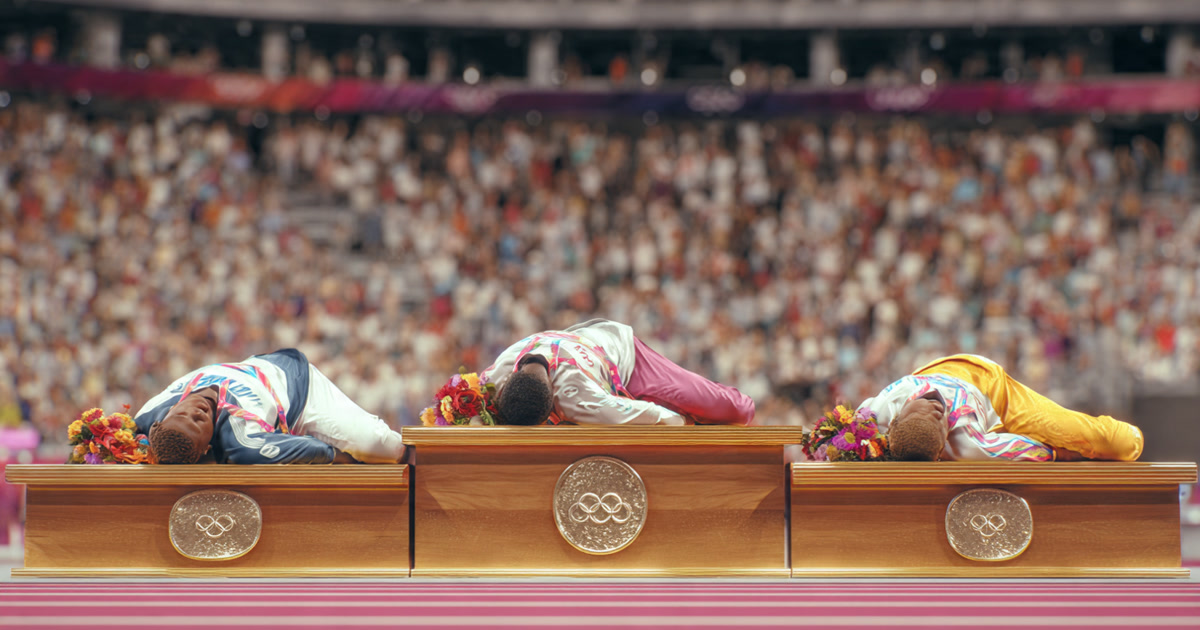
I. The Harm Profile of the Olympic Marathon
The marathon was introduced to the modern Olympic Games in 1896, designed to commemorate the legend of Pheidippides, an Athenian messenger who reportedly ran from Marathon to Athens to deliver news of a military victory and then died.1 The fact that the founding myth of the event is a story about exercise-induced death has not, historically, been treated as a design concern.
A systematic review published in the British Journal of Sports Medicine found that the annual injury incidence among marathon runners ranges from 19.4 to 92.4 percent, depending on how "injury" is defined and how training populations are tracked.2 The most commonly reported injuries include patellofemoral pain syndrome (runner's knee), iliotibial band syndrome, plantar fasciitis, Achilles tendinopathy, and stress fractures of the tibia and metatarsals. These are not fringe outcomes. They are the modal experience of marathon training.
The cardiac risk is smaller in absolute terms but more consequential in severity. A study published in JAMA found that the incidence of cardiac arrest during marathon and half-marathon races in the United States was approximately 0.54 per 100,000 participants, with a fatality rate of 0.39 per 100,000.3 The study analyzed data from 10.9 million race participants over a 10-year period. The primary cause of death was hypertrophic cardiomyopathy in younger runners and atherosclerotic coronary disease in older runners.
The Wikipedia list of marathon fatalities, while incomplete, documents over 90 deaths during organized marathon events between 1896 and 2025.4 This number understates the total, as it excludes deaths during training and deaths occurring in the hours or days following race completion.
II. The Health Benefits of Sleep
Sleep is not rest. It is a metabolically active process during which the brain engages in glymphatic clearance of neurotoxic waste products (including beta-amyloid, a protein associated with Alzheimer's disease), synaptic homeostasis, memory consolidation, and immune system regulation.5
A meta-analysis of 153 studies, published in the Annals of Behavioral Medicine, found that sleep deprivation is associated with increased all-cause mortality (hazard ratio 1.12 for short sleep duration), cardiovascular disease (HR 1.48), type 2 diabetes (HR 1.28), obesity, depression, and impaired immune function.6 Conversely, adequate sleep of 7 to 9 hours per night is associated with lower rates of every condition on the list.
The NASA Ames Research Center conducted a study in the 1990s demonstrating that a planned nap of 26 minutes improved alertness by 54 percent and task performance by 34 percent in commercial airline pilots.7 The study was conducted in partnership with the FAA and remains one of the most cited findings in operational fatigue management.
A 2007 study published in the Archives of Internal Medicine (now JAMA Internal Medicine) found that habitual nappers in a Greek population cohort had a 37 percent lower risk of coronary mortality compared to non-nappers, after adjusting for age, sex, physical activity, diet, and other confounders.8 The study followed 23,681 healthy adults for an average of 6.3 years. The authors described the effect size as "remarkably strong."
The injury rate for napping is zero. The cardiac arrest rate for napping is zero. The mortality rate for napping is zero (excluding the pre-existing conditions of the napper). No systematic review has identified a single case of nap-induced patellofemoral syndrome.
III. The Olympic Charter and Sport Inclusion Criteria
The Olympic Charter, published by the International Olympic Committee, establishes the criteria for including sports in the Olympic program. Under Rule 45 of the Olympic Charter, a sport must be "widely practiced by men in at least 75 countries and on four continents and by women in at least 40 countries and on three continents" to be eligible for inclusion in the Summer Games.9
Sleep is practiced by humans in every country on Earth. It is practiced by every gender. It is practiced on every continent, including Antarctica (where research station personnel sleep an average of 6.5 hours per night, according to a study published in the International Journal of Circumpolar Health).10 No other activity in human experience meets the Olympic Charter's participation thresholds more comprehensively.
The Charter further states that the Olympic Games should contribute to "building a peaceful and better world by educating youth through sport practised in accordance with Olympism and its values."11 The Fundamental Principles of Olympism include "the harmonious development of humankind, with a view to promoting a peaceful society concerned with the preservation of human dignity."
It is difficult to argue that an activity with a non-trivial fatality rate better embodies the "preservation of human dignity" than an activity that improves cognitive function, reduces cardiovascular risk, and has never killed anyone.
IV. The Competitive Framework
Competitive napping is not without precedent. The National Napping Championship was held in Madrid, Spain, in 2010, organized by the National Association of Friends of the Siesta.12 Participants were judged on speed of sleep onset, depth of sleep (measured by posture and snoring), and duration. The event attracted international media coverage and over 300 competitors.
The scoring methodology for Olympic Competitive Napping could be adapted from existing sleep polysomnography standards established by the American Academy of Sleep Medicine. The AASM Scoring Manual defines sleep stages (N1, N2, N3, and REM) using electroencephalography (EEG), electromyography (EMG), and electrooculography (EOG).13
A proposed scoring system might evaluate:
1. Sleep onset latency: Time from lights-out to the first epoch of N1 sleep. The average adult sleep onset latency is 10 to 20 minutes.14 Elite nappers would be expected to achieve latencies under 5 minutes, consistent with data from military sleep research on trained nap-capable personnel.
2. Sleep efficiency: The ratio of total sleep time to total time in bed, expressed as a percentage. Normal sleep efficiency for a nap is 85 to 95 percent. Olympic-caliber efficiency would require scores above 95 percent.
3. Depth score: The percentage of nap time spent in N2 and N3 (slow-wave) sleep stages, weighted by EEG spectral power density. Deeper sleep produces greater cognitive restoration.15
4. Recovery index: Post-nap performance on the Psychomotor Vigilance Task (PVT), a standardized reaction-time test used by NASA, the FAA, and the U.S. military to assess alertness.16 Higher post-nap PVT scores, relative to pre-nap baseline, would indicate superior restorative napping capacity.
This system provides objective, reproducible scoring using validated clinical instruments. It is more quantitatively rigorous than the judging systems currently used for Olympic sports including gymnastics, diving, figure skating, and breakdancing.
V. The VO2 Max Paradox
Proponents of the marathon argue that it represents the pinnacle of human endurance capacity, typically measured by maximal oxygen uptake (VO2 max). Elite male marathon runners achieve VO2 max values of 70 to 85 mL/kg/min.17 This is impressive by any standard.
However, VO2 max declines with age at a rate of approximately 10 percent per decade in sedentary adults and 5 percent per decade in trained athletes, according to longitudinal data published in the journal Circulation.18 This means that the capacity to perform at an Olympic marathon level is biologically limited to a narrow age window, typically 25 to 35 years.
Sleep quality, by contrast, can be maintained and even improved through training at any age. A study published in the Journal of Clinical Sleep Medicine found that cognitive behavioral therapy for insomnia (CBT-I) produced significant and durable improvements in sleep efficiency in adults aged 55 to 85.19 The competitive napping window is effectively the entire adult lifespan.
The IOC has expressed concern about the long-term health of Olympic athletes, particularly regarding chronic traumatic encephalopathy in contact sports and overuse injuries in endurance events.20 A sport in which participation actively improves long-term health outcomes represents a fundamentally different value proposition than a sport in which participation carries measurable mortality risk.
VI. The Spectator Problem
The most common objection to competitive napping as an Olympic event is that it would be boring to watch. This objection deserves serious consideration but does not survive contact with the data.
The Olympic marathon takes approximately 2 hours and 2 minutes for the winner and over 2 hours and 30 minutes for the median elite field.21 Television ratings data from NBC's coverage of the 2024 Paris Olympics show that marathon viewership drops approximately 40 percent between the start and the 90-minute mark.22 Most viewers do not watch the entire marathon. They watch the start, check their phones for 90 minutes, and tune back in for the final kilometer.
A competitive napping event with a 20-minute nap window, real-time EEG visualization displayed as a spectral heatmap, and a post-nap cognitive performance test would have a total event duration of approximately 35 minutes. The real-time neurological data would provide continuous visual feedback analogous to heart rate monitoring in cycling broadcasts. The post-nap PVT scores would provide a decisive and immediately legible finish.
Thirty-five minutes of active visual data is, by any reasonable measure, more engaging than 90 minutes of watching people run in a straight line.
VII. Limitations
This analysis does not account for the cultural significance of the marathon, which is substantial. The event has been part of the Olympic program since 1896 and carries symbolic weight that no amount of sleep science can fully replicate.
The analysis also does not account for the endorphin response produced by distance running, which contributes to psychological well-being and may partially offset the physical harm profile. Sleep produces its own neurochemical benefits (including increased serotonin availability and reduced cortisol), but these operate through different mechanisms and may not be directly comparable.
Finally, the competitive napping framework proposed here has not been tested at scale. It is possible that elite competitive nappers would develop their own category of injuries, such as chronic neck strain from competition sleeping positions, or that the psychological pressure of napping for national honor could paradoxically produce insomnia.
VIII. Conclusion
The Olympic marathon is an event in which highly trained athletes subject themselves to measurable cardiac risk, near-universal musculoskeletal injury during training, and potential fatality, in commemoration of a man who died doing the same thing. It is widely practiced, which satisfies the Charter, but so is sleeping, which satisfies it more comprehensively.
Competitive napping produces zero injuries, reduces cardiovascular risk, improves cognitive function, is accessible to every age group and physical ability level, meets Olympic participation thresholds in every country on Earth, and can be scored with greater quantitative precision than half the events currently on the Olympic program.
The IOC has not responded to requests for comment on this analysis.