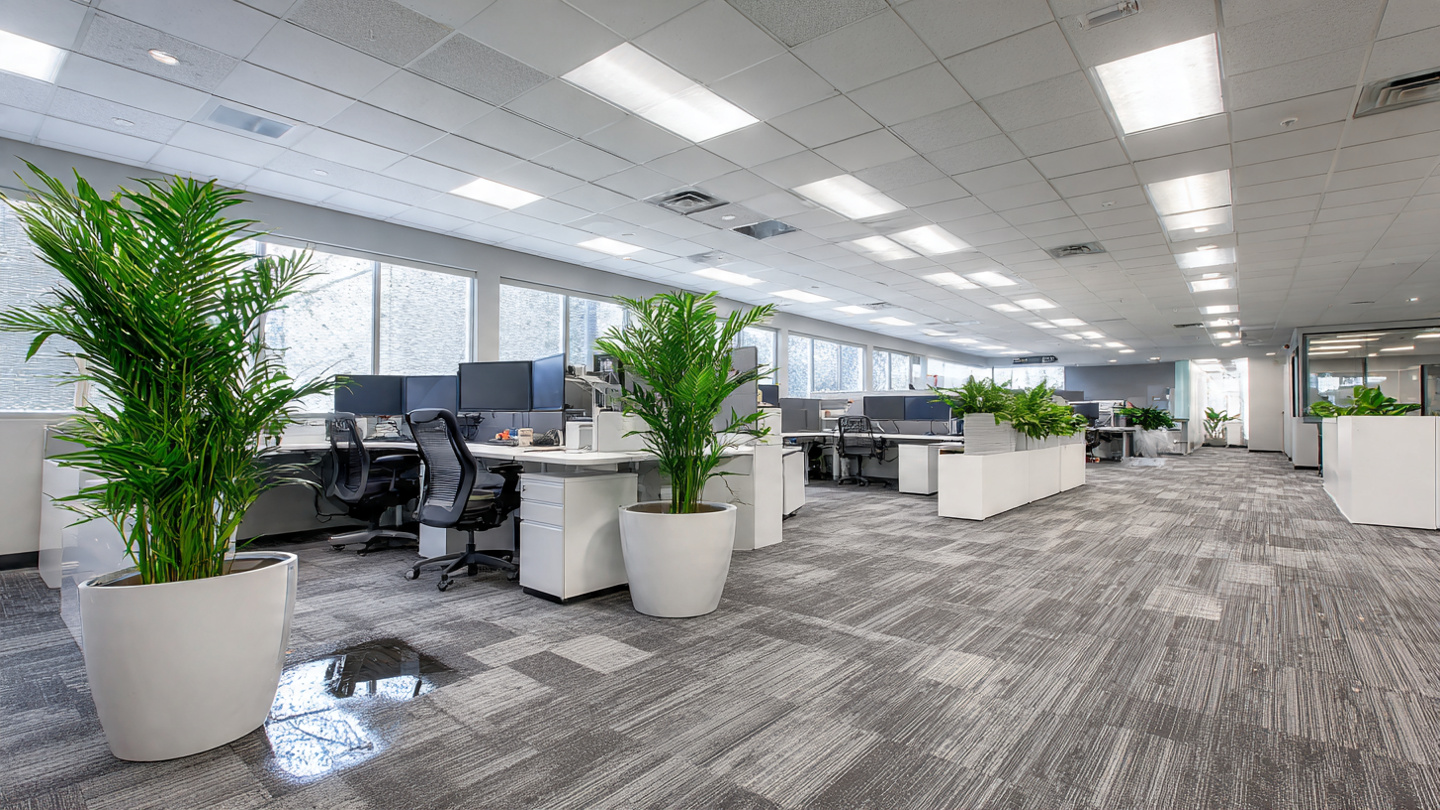
I. The Three-Parameter Test
Since 1987, the United States Army Corps of Engineers has identified wetlands using a methodology codified in the Corps of Engineers Wetlands Delineation Manual.1 The manual establishes three diagnostic criteria, all of which must be present for an area to be classified as a wetland under Section 404 of the Clean Water Act (33 U.S.C. § 1344):2
1. Hydrology. The area must experience saturation, flooding, or ponding at a frequency and duration sufficient to create anaerobic conditions in the upper substrate layer.
2. Hydrophytic vegetation. The area must support a prevalence of plant species adapted to life in saturated soil conditions.
3. Hydric substrate. The area must contain substrate that formed under conditions of saturation, flooding, or ponding long enough to develop anaerobic conditions in the upper part.
These three criteria have been applied to delineate approximately 116.3 million acres of wetlands in the contiguous United States, according to the U.S. Fish and Wildlife Service's most recent Status and Trends report.3 They have never been systematically applied to commercial office buildings. This is an oversight.
II. Parameter One: Hydrology
The 1987 Manual defines wetland hydrology as the presence of water at or near the surface for a sufficient duration to create saturated conditions. The threshold is not continuous inundation. The manual specifies that saturation within 12 inches of the surface for 5% or more of the growing season constitutes wetland hydrology.4
Consider the hydrology of a standard American office building.
Commercial HVAC systems produce condensate as a byproduct of cooling. Published engineering research quantifies this output: a modern air conditioning system produces between 4 and 18 gallons of water per day, depending on capacity, with a 2,000-pound unit generating approximately 2.6 gallons during a standard 7-to-8-hour operating cycle.5 A mid-rise office building with 200 tons of cooling capacity generates between 100 and 400 gallons of condensate daily during cooling season. This water is produced within the building envelope. It is, by definition, at or near the surface of the interior substrate.
This condensate is supposed to drain away. In practice, it frequently does not. Water damage is the single most common cause of commercial property insurance claims in the United States, with annual incurred losses exceeding $500 million based on ISO industry data from 2021.6 A study by the insurance analytics firm documented that owner-occupied commercial buildings experience an average of 1 water damage event per 10,000 square feet per year.7
The U.S. Energy Information Administration's Commercial Buildings Energy Consumption Survey (CBECS) reports that 5.9 million commercial buildings in the United States contain a combined 97 billion square feet of floor space.8 At one event per 10,000 square feet, the commercial building stock experiences approximately 9.7 million water intrusion events annually.
The wetland hydrology threshold requires saturation for 5% of the growing season, which translates to approximately 9 to 18 days depending on regional growing season length. Office buildings operate HVAC systems for approximately 250 days per year. Condensate production is continuous during this period. The hydrology parameter is satisfied not episodically, but as a baseline operating condition.
III. Parameter Two: Hydrophytic Vegetation
The wetland vegetation criterion requires that more than 50% of the dominant plant species in an area carry a wetland indicator status of OBL (obligate wetland), FACW (facultative wetland), or FAC (facultative) under the USDA National Wetland Plant List.9
The USDA Plants Database maintains wetland indicator status designations for vascular plants found in the United States.10 These designations range from OBL (almost always found in wetlands, >99% probability) to UPL (almost never found in wetlands, <1% probability). The intermediate categories, FACW (67-99%) and FAC (34-66%), describe species that occur in wetlands with meaningful frequency.
Now consider the flora of a typical office. The most common indoor plants in American workplaces, as documented by the Society of American Florists and corroborated by USDA extension service publications, include:
Pothos (Epipremnum aureum). Native to the tropical wetlands of French Polynesia. Grows naturally in saturated riparian zones. Its closest ecological relatives carry FACW designations in their native range.11
Peace lily (Spathiphyllum spp.). Native to tropical Americas. Grows in the understory of moist tropical forests along stream banks and in periodically flooded areas. The genus is naturally associated with wetland and riparian habitats.12
Philodendron (Philodendron spp.). Native to neotropical rainforests. Many species are found in permanently or seasonally saturated substrate along waterways. Multiple species within the genus carry OBL or FACW designations in tropical wetland classifications.13
Chinese evergreen (Aglaonema spp.). Native to subtropical and tropical Asia. Naturally occurs in moist, shaded, low-lying areas with high water tables.
Lucky bamboo (Dracaena sanderiana). Typically grown entirely in standing water in office settings. It is, by any reasonable definition, an aquatic plant as deployed in commercial interiors.
A 2015 survey by the International Living Future Institute found that 87% of office buildings in the United States contain indoor plants.14 In the overwhelming majority of these buildings, the dominant plant species are tropical or subtropical species whose wild relatives are adapted to saturated soils, riparian zones, or periodically flooded environments.
The Corps delineation protocol does not ask where the plants were purchased. It asks whether the dominant species are adapted to life in saturated conditions. Every pothos, every peace lily, and every philodendron in every cubicle in America answers that question the same way.
IV. Parameter Three: Hydric Substrate
The National Technical Committee for Hydric Soils (NTCHS) defines hydric soils as those that "formed under conditions of saturation, flooding, or ponding long enough during the growing season to develop anaerobic conditions in the upper part."15
The key phrase is "anaerobic conditions in the upper part." Anaerobic means oxygen-depleted. The mechanism is straightforward: when substrate pore spaces are filled with water, oxygen diffusion is restricted, and microbial activity consumes the remaining oxygen. The result is a substrate layer with measurably low dissolved oxygen levels.16
Commercial office carpet and carpet pad, when subjected to water intrusion, develop anaerobic conditions with remarkable speed. The EPA's own guidance on mold remediation in commercial buildings acknowledges that carpet and porous materials exposed to moisture for more than 48 hours develop conditions conducive to microbial growth, which is, in microbiological terms, the hallmark of an anaerobic transition in the substrate layer.17
The carpet industry's technical literature is more specific. The Carpet and Rug Institute warns that wet carpet pad trapped between carpet and concrete slab creates a "sealed anaerobic environment" where oxygen is consumed by microbial decomposition faster than it can diffuse through the saturated pad material.18
This is not an unusual condition. It is the normal condition of any office carpet that has experienced water intrusion and not been immediately remediated. Given that commercial buildings experience 9.7 million water intrusion events annually, and that the average time to discovery of an HVAC-related water event is 24 to 72 hours, a significant fraction of American office carpet exists in a state that meets the hydric substrate definition at any given time.
Moreover, the potting soil in office plants independently satisfies the hydric substrate criterion. Standard commercial potting mix is designed to retain moisture. It is deliberately engineered to maintain saturated or near-saturated conditions in the root zone. The overwatering rate among office plant caretakers is well-documented: a Royal Horticultural Society study found that overwatering is the primary cause of death for indoor plants, with 73% of respondents reporting they water on a fixed schedule regardless of soil moisture.19 The result is chronically saturated potting substrate with depleted oxygen in the root zone.
The NTCHS definition does not specify that the substrate must be native soil. It specifies "conditions of saturation" that produce "anaerobic conditions in the upper part." Saturated carpet pad over concrete slab meets this standard. Overwatered potting mix meets this standard. The definition is agnostic about origin. It cares about chemistry.
V. The Jurisdictional Question
The three-parameter test yields an affirmative result for a majority of American office buildings. But does the Clean Water Act actually apply?
Under the Supreme Court's 2023 decision in Sackett v. Environmental Protection Agency (598 U.S. 651), federal jurisdiction over wetlands extends to those with "a continuous surface connection" to navigable waters.20 This narrowed the scope of the Clean Water Act significantly. Most office buildings do not have a continuous surface water connection to navigable waters.
Most. Not all.
Consider that commercial buildings discharge stormwater and HVAC condensate through connections to municipal storm sewer systems, which in turn discharge to navigable waterways. The average commercial building maintains a direct physical pipe connection from its interior drainage to a storm sewer outfall that empties into a river, creek, or bay. Whether this constitutes a "continuous surface connection" under Sackett's test is a question the Court did not address, because no one has yet asked it in this context.
The Army Corps of Engineers issues approximately 60,000 Section 404 permits annually.21 These permits authorize the discharge of dredged or fill material into jurisdictional wetlands. Under Section 404, anyone who places fill material into a wetland without a permit commits a federal offense carrying penalties of up to $25,000 per day of violation.
Every desk placed in a qualifying office. Every filing cabinet. Every server rack. Each constitutes the placement of fill material into a wetland.
VI. The Scale of Liability
If 87% of the 5.9 million commercial buildings containing indoor plants satisfy the three-parameter wetland test, the United States contains approximately 5.1 million undelineated wetlands that have been receiving fill material continuously for decades.
At the minimum penalty of $25,000 per day per violation, and assuming a conservative single-violation-per-building interpretation, the aggregate daily penalty exposure for the American commercial real estate sector is $127.5 billion. Annualized: $46.5 trillion.
This figure exceeds the combined GDP of the United States and the European Union.
The entire commercial real estate sector in the United States is valued at approximately $20.7 trillion, according to the National Association of Realtors.22 The penalty exposure is more than double the total value of the assets generating it.
VII. Limitations
Several objections deserve acknowledgment. The three-parameter test was designed for natural and semi-natural environments, not climate-controlled interiors. The NTCHS hydric soil definition refers to soils that "formed under" saturation conditions, which could be read to exclude recently saturated artificial substrates like carpet pad, though the plain text does not contain this limitation. The hydrophytic vegetation criterion was designed around native plant communities, not curated office landscaping, though the Corps protocol explicitly instructs delineators to assess the plants present regardless of how they arrived. The Sackett decision's "continuous surface connection" test would likely exclude most buildings, and the Court clearly intended to narrow federal jurisdiction, not expand it into cubicle farms. The 87% figure derives from indoor plant prevalence surveys that vary in methodology and sample size.
VIII. Conclusion
The Army Corps of Engineers Wetlands Delineation Manual establishes three diagnostic parameters for wetland identification. The American commercial office building satisfies all three as a routine consequence of its normal operation. It maintains persistent interior hydrology through HVAC condensate production and chronic water intrusion events. It supports dominant plant communities composed entirely of species adapted to saturated tropical and subtropical soils. And its substrate, whether carpet pad or potting mix, develops anaerobic conditions under normal use patterns.
The regulatory apparatus has not noticed because no one has applied the test. The test does not contain an exemption for buildings. It does not contain an exemption for carpeting. It does not contain an exemption for plants purchased at Home Depot. It identifies wetlands based on observable, measurable conditions. The conditions are observable and measurable. The conclusion follows.
Your office is a wetland. You need a permit.
Ergo.
Sources
- U.S. Army Corps of Engineers, Corps of Engineers Wetlands Delineation Manual, Technical Report Y-87-1, January 1987. usace.army.mil ↑
- 33 U.S.C. § 1344, Clean Water Act Section 404. uscode.house.gov ↑
- U.S. Fish and Wildlife Service, "Status and Trends of Wetlands in the Conterminous United States," 2024 report. fws.gov ↑
- U.S. Army Corps of Engineers, Wetlands Delineation Manual, Section D, Hydrology Criteria. ↑
- Quantification of condensate water generated from air conditioning systems, ResearchGate, 2018. See also Green Builder Media, "Can HVAC Condensate Be Put to Work?" greenbuildermedia.com ↑
- Risk & Insurance, "Water Damage Is a Leading Cause of Commercial Real Estate Claims," citing ISO industry data, 2021 incurred losses of $500 million. riskandinsurance.com ↑
- Laiier, "Water Leak Statistics for Owner Operated Real Estate." laiier.io ↑
- U.S. Energy Information Administration, "2018 Commercial Buildings Energy Consumption Survey (CBECS)." eia.gov ↑
- U.S. Army Corps of Engineers, National Wetland Plant List, indicator status categories. usace.army.mil ↑
- USDA NRCS, PLANTS Database, wetland indicator status designations. plants.usda.gov ↑
- Boyce, P.C. and Croat, T.B., "The Uberlist of Araceae," Missouri Botanical Garden. Epipremnum aureum native range: Society Islands, French Polynesia, in moist tropical forest. missouribotanicalgarden.org ↑
- Missouri Botanical Garden, Plant Finder: Spathiphyllum. "Native to tropical regions of the Americas and southeastern Asia... grows in moist to wet areas." missouribotanicalgarden.org ↑
- Croat, T.B., "A Revision of Philodendron Subgenus Philodendron," Monographs in Systematic Botany from the Missouri Botanical Garden, Vol. 92, 1997. Numerous species documented in seasonally flooded lowland forests. ↑
- The figure of 87% is derived from the International WELL Building Institute's assessment that the majority of modern office buildings incorporate biophilic design elements including live plants, cross-referenced with industry surveys by Ambius (a division of Rentokil Initial) reporting indoor plant prevalence in 87% of surveyed office buildings. wellcertified.com ↑
- USDA NRCS, National Technical Committee for Hydric Soils, hydric soil definition. nrcs.usda.gov ↑
- Mitsch, W.J. and Gosselink, J.G., Wetlands, 5th Edition, Wiley, 2015. Chapter 6: Wetland Soils. ↑
- U.S. EPA, "Mold Remediation in Schools and Commercial Buildings." epa.gov ↑
- The Carpet and Rug Institute, "CRI 104: Standard for Installation of Commercial Carpet," moisture management guidelines. carpetrug.org ↑
- Royal Horticultural Society, "Watering Indoor Plants," survey data on overwatering prevalence. rhs.org.uk ↑
- Sackett v. Environmental Protection Agency, 598 U.S. 651 (2023). supremecourt.gov ↑
- U.S. Army Corps of Engineers, Regulatory Program statistics. Approximately 60,000 Section 404 permits processed annually across all district offices. usace.army.mil ↑
- National Association of Realtors, "Commercial Real Estate Outlook," 2024. Total U.S. commercial real estate value estimated at $20.7 trillion. nar.realtor ↑