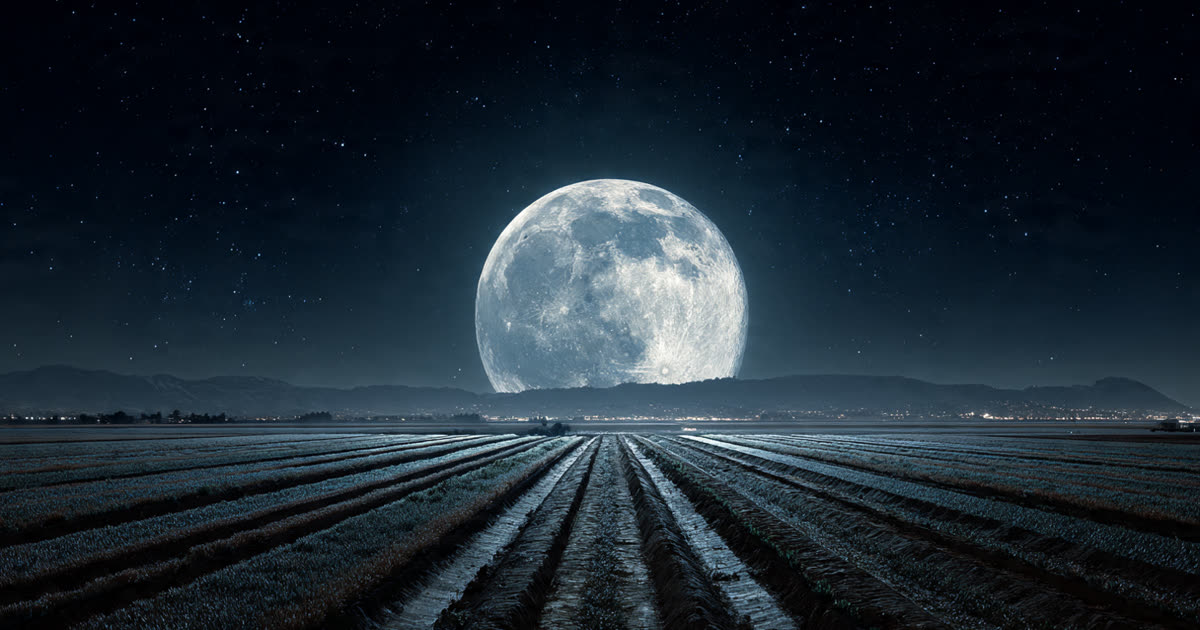
I. The Definition
Since 1974, the United States Department of Agriculture has defined a "farm" as any place from which $1,000 or more of agricultural products were produced and sold, or normally would have been sold, during the census year.1
This definition, used for the Census of Agriculture conducted every five years by the USDA National Agricultural Statistics Service (NASS), is the federal government's authoritative standard for determining what constitutes a farm. It governs eligibility for USDA programs, shapes agricultural policy, and determines the allocation of billions of dollars in subsidies, crop insurance, and rural development funding.2
The definition has three elements. First, there must be a "place." Second, agricultural products must be produced. Third, those products must be sold or normally would have been sold for at least $1,000.
The definition does not specify that the place must be located within the United States. It does not specify that the place must be located on Earth. The USDA's own FAQ documentation, published by the North Carolina Department of Agriculture and Consumer Services, confirms that the current definition has remained unchanged since 1974 and contains no geographic restriction beyond the implicit scope of the census itself.3
II. The Place
The Moon has a surface area of approximately 14.6 million square miles, or roughly 9.4 billion acres.4 This makes it approximately four times the size of all arable land on Earth (2.3 billion acres) and 10 times the total farmland of the United States (893 million acres).5
The surface is composed primarily of regolith, a layer of loose, fragmented material ranging from fine dust to boulders, with an average depth of 4 to 5 meters in the maria (basaltic plains) and 10 to 15 meters in the highlands.6 This material is mineral-rich, containing silicon, iron, calcium, aluminum, magnesium, and titanium in varying concentrations depending on region.7
The USDA definition of "place" does not require specific soil composition. Many USDA-recognized farms in the United States operate on marginal soils that require substantial amendment. Hydroponic and aeroponic operations, which use no soil at all, qualify as farms under the census definition provided they meet the production threshold.8
III. The Production
In May 2022, researchers at the University of Florida's Space Plants Lab published a landmark study in Communications Biology (a Nature Portfolio journal) demonstrating that plants can be grown in actual lunar regolith.9
The researchers planted seeds of Arabidopsis thaliana (thale cress, a standard model organism in plant biology) in 12 samples of lunar regolith collected during the Apollo 11, 12, and 17 missions. All 12 plants germinated. All 12 grew leaves. The experiment established, for the first time, that terrestrial plants can grow in extraterrestrial soil.10
The plants were stressed. Genetic analysis revealed that the lunar-grown specimens activated defense-related gene pathways associated with salt, metal, and oxidative stress at rates significantly higher than control plants grown in terrestrial volcanic ash. Their growth was stunted compared to controls. Several exhibited purpling of the leaves, a visible indicator of anthocyanin accumulation in response to environmental stress.11
But they grew. And the USDA definition of "farm" does not require that the agricultural products be healthy, robust, or commercially competitive. It requires that they be produced.
IV. The Sale
The third element of the USDA farm definition requires that agricultural products be "sold, or normally would have been sold" for at least $1,000.
The "normally would have been sold" clause is significant. It exists to capture subsistence farms that consume their own production, farms that experience crop failure but would have sold in a normal year, and operations where the product has demonstrable market value even if not actually transacted. The NASS census guidelines specify that the threshold can be met by reasonable estimation of what the product would command on the open market.12
The market value of lunar regolith samples is not theoretical. It is documented. In 2022, a 1-gram sample of lunar regolith brought to Earth by the Soviet Luna 16 mission sold at Christie's auction for $504,375.13 NASA values its Apollo lunar samples at approximately $50,800 per gram for accounting purposes, based on the total cost of the Apollo program divided by the total mass of returned samples.14
The 12 Arabidopsis thaliana specimens grown in lunar regolith at the University of Florida are the first and, as of this writing, only plants ever grown in extraterrestrial soil. Their scientific value is incalculable. Their market value, if assessed by analogy to other unique botanical specimens, would easily exceed $1,000. Rare orchid specimens have sold for over $200,000 at auction.15 First-of-category biological specimens routinely command premiums orders of magnitude above their agricultural value.
The University of Florida's plants were not sold. But the definition asks whether they "normally would have been sold" for at least $1,000. Given that comparable unique specimens command six-figure prices, the answer is unambiguous.
V. The Sovereignty Question
One might object that the Moon cannot be a farm because it is not sovereign territory. The Outer Space Treaty of 1967, ratified by the United States, states in Article II: "Outer space, including the moon and other celestial bodies, is not subject to national appropriation by claim of sovereignty, by means of use or occupation, or by any other means."16
This appears dispositive. If no nation can claim sovereignty over the Moon, then no nation's agricultural census can encompass it.
But the analysis is more nuanced than it first appears. The Outer Space Treaty prohibits national appropriation. It does not prohibit use. Article I explicitly states that outer space "shall be free for exploration and use by all States."17 The distinction between appropriation and use is not academic. NASA operates facilities, conducts experiments, and extracts resources from the lunar surface under the legal framework that use is permitted even where sovereignty is not.
The U.S. Commercial Space Launch Competitiveness Act of 2015 (51 U.S.C. § 51301-51303), signed by President Obama, explicitly grants U.S. citizens the right to "possess, own, transport, use, and sell" any space resource obtained through commercial operations.18 This statute does not claim sovereignty over the Moon. It asserts jurisdiction over resources extracted from it by U.S. entities.
If a U.S. entity can legally own and sell resources extracted from the Moon, then a U.S. entity can produce agricultural products on the Moon. And if agricultural products can be produced on the Moon by a U.S. entity, then the production element of the USDA farm definition can be satisfied on the Moon by a U.S. entity.
VI. The NASA Precedent
NASA is a U.S. government agency. The lunar regolith samples used in the University of Florida experiment were NASA property, collected by NASA employees during NASA missions funded by U.S. taxpayers.19
NASA provided those samples to the University of Florida under a research agreement. The university grew plants in them. The plants constituted agricultural production. The production occurred using materials sourced from the Moon under the authority of a U.S. government entity.
The USDA Census of Agriculture has historically counted agricultural production by federal agencies. The Department of Defense operates agricultural land. The Bureau of Land Management leases grazing rights on federal land. Federal prison farms have been counted in the census.20
The question is not whether a U.S. government-affiliated operation can constitute a farm under the census definition. It can. The question is whether the geographic origin of the growing medium disqualifies the operation. The definition does not address this question, because in 1974, when the definition was adopted, it did not need to.
VII. The Subsidy Implication
If the Moon qualifies as a farm under the USDA census definition, it becomes eligible, in principle, for USDA farm programs.
The Agricultural Improvement Act of 2018 (the "Farm Bill") allocates approximately $428 billion over ten years for farm programs, including commodity support, crop insurance, conservation payments, and rural development.21 Eligibility for many of these programs is keyed to the census definition. If an operation meets the census definition of a farm, it is presumptively eligible for program participation, subject to additional program-specific criteria.22
The Conservation Reserve Program (CRP), for example, pays farmers to remove environmentally sensitive land from agricultural production. The Moon's surface is, by any measure, environmentally sensitive. Lunar regolith is vulnerable to contamination from terrestrial biological material, a concern that NASA's Planetary Protection Office has documented extensively.23 An argument could be made that the entirety of the Moon's 9.4 billion acres qualifies for conservation set-aside payments.
The current CRP payment rate averages approximately $52 per acre per year.24 Applied to the Moon's total surface area, this would yield an annual conservation payment of approximately $489 billion.
This figure exceeds the entire ten-year authorization of the Farm Bill.
VIII. The Administrative Challenge
There are practical objections. The USDA Farm Service Agency would need to process the application. A county committee would need to evaluate it, and no county encompasses the Moon. The Farm Bill requires "actively engaged in farming" determinations that assume physical presence on the land.
These are administrative barriers, not definitional ones. The statute defines what a farm is. The administrative apparatus determines how farms are enrolled in programs. When the definition and the apparatus diverge, it is the apparatus that adapts, not the definition. This has happened before: the 2018 Farm Bill extended eligibility to urban farming operations that the original administrative infrastructure was not designed to serve.25
IX. Conclusion
The USDA defines a farm as a place from which $1,000 or more of agricultural products were produced and sold, or normally would have been sold. The Moon is a place. Plants have been grown in its soil. Those plants, as unique specimens of extraterrestrial agriculture, would command prices well in excess of $1,000 on the open market.
The definition contains no geographic restriction. Federal law permits U.S. entities to own and sell resources extracted from the Moon. NASA has already facilitated agricultural production using lunar material. And the administrative frameworks that govern farm program eligibility are designed to adapt to new categories of qualifying operations.
By the USDA's own definition, the Moon is a farm. It has been since May 2022, when twelve small plants grew in lunar soil in a laboratory in Gainesville, Florida, and nobody at the Department of Agriculture noticed.
Ergo.
Sources
- USDA National Agricultural Statistics Service, "Census of Agriculture: Farms and Farmland," definition effective since 1974. nass.usda.gov ↑
- USDA Economic Research Service, "Farm Typology." ers.usda.gov ↑
- North Carolina Department of Agriculture and Consumer Services, "Small Farms FAQs." ncagr.gov ↑
- NASA, "Moon Fact Sheet." nssdc.gsfc.nasa.gov ↑
- USDA Economic Research Service, "Farmland." ers.usda.gov ↑
- NASA Science, "What is Lunar Regolith?" science.nasa.gov ↑
- L.A. Taylor et al., "Mineralogical and chemical characterization of lunar highland soils," Journal of Geophysical Research, vol. 106, 2001. doi.org ↑
- USDA NASS, "2017 Census of Agriculture: Subject Series, Hydroponics." nass.usda.gov ↑
- A.L. Paul et al., "Plants grown in Apollo lunar regolith present stress-associated transcriptomes that inform prospects for lunar exploration," Communications Biology, vol. 5, 382, 2022. doi.org ↑
- Ibid. ↑
- Ibid. ↑
- USDA NASS, "Census of Agriculture: Methodology," Appendix A, Farm Definition. nass.usda.gov ↑
- Christie's, "Lunar Sample Return, Luna 16," Sale 21893, Lot 110, November 2022. Realized price $504,375. christies.com ↑
- NASA cost estimate derived from total Apollo program expenditure ($25.4 billion in 1973 dollars, approximately $194 billion adjusted) divided by total sample mass returned (382 kg). This per-gram figure is an accounting approximation, not a market price. ↑
- The Shenzhen Nongke Orchid, a laboratory-created specimen, sold for $200,000 at auction in 2005. ↑
- Treaty on Principles Governing the Activities of States in the Exploration and Use of Outer Space, including the Moon and Other Celestial Bodies (Outer Space Treaty), Article II, 1967. unoosa.org ↑
- Ibid., Article I. ↑
- U.S. Commercial Space Launch Competitiveness Act, 51 U.S.C. § 51301-51303, 2015. congress.gov ↑
- NASA, "Apollo Lunar Samples." curator.jsc.nasa.gov ↑
- USDA NASS, "2017 Census of Agriculture: Government Operations." Federal entities with qualifying agricultural production are counted. ↑
- Congressional Research Service, "The 2018 Farm Bill (P.L. 115-334): Summary and Side-by-Side Comparison." crsreports.congress.gov ↑
- Ibid. Program-specific eligibility criteria are layered on top of the base census definition. ↑
- NASA Planetary Protection Office. science.nasa.gov ↑
- USDA Farm Service Agency, "Conservation Reserve Program: Monthly Summary," 2024. Average annual rental rate. fsa.usda.gov ↑
- Agricultural Improvement Act of 2018, Section 12302, Urban Agriculture provisions. congress.gov ↑