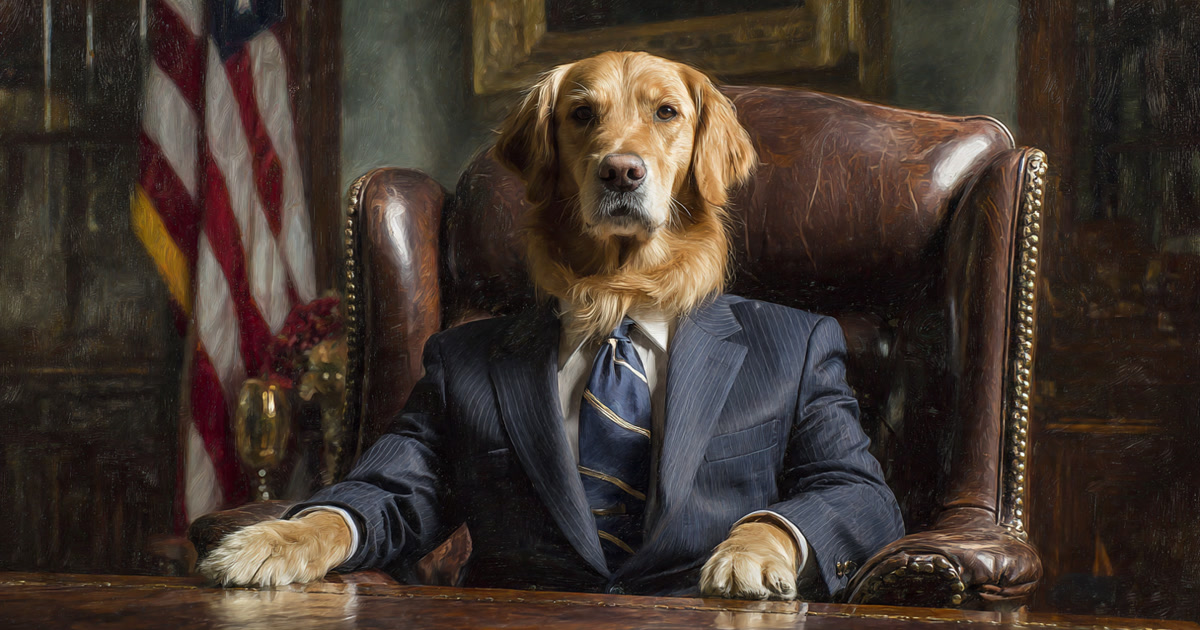
I. The Selection Problem
The Chair of the Federal Reserve Board of Governors is, by most measures, the second most powerful person in the United States. The position controls monetary policy for the world's largest economy, influences global interest rates, and can move trillions of dollars in asset valuations with a single sentence. The process by which this person is selected deserves scrutiny commensurate with its consequences.
Under the Banking Act of 1935, the Chair is appointed by the President of the United States from among the sitting members of the Board of Governors, subject to confirmation by the Senate.1 The Federal Reserve Act specifies that Board members must be chosen with "due regard to a fair representation of the financial, agricultural, industrial, and commercial interests, and geographical divisions of the country."2
Notably, the statute contains no requirement that the Chair hold an economics degree. It contains no requirement for prior central banking experience. It does not specify a minimum age. It does not, in its text, require that the appointee be a natural person.3
This is not a technicality. The absence of qualification criteria is a documented feature of the statutory design. Congress deliberately avoided prescriptive requirements to preserve presidential flexibility. The question of who is eligible is, in practice, a question of who the President nominates and the Senate confirms.
II. The Performance Baseline
To evaluate optimal candidates, it is useful to establish a performance baseline. What does an effective Fed Chair actually do?
A 2019 Brookings Institution analysis identified four measurable dimensions of Fed Chair performance: inflation management (maintaining the 2% target), employment outcomes (proximity to maximum employment), financial stability (absence of systemic crises), and communication effectiveness (market clarity and reduced volatility around FOMC announcements).4
Of these four dimensions, the last is the most empirically interesting. Research by Lucca and Trebbi (2009), published in the Journal of Finance, demonstrated that the linguistic content of FOMC statements accounts for a statistically significant portion of Treasury yield movements.5 Nakamura and Steinsson (2018) extended this finding, showing that Fed communications move asset prices even when the actual policy rate remains unchanged.6
This suggests that a substantial portion of the Fed Chair's economic impact comes not from technical decision-making but from signaling. The market responds to what the Chair communicates and how credibly that communication is received.
III. The Credibility Variable
Central bank credibility is the most studied variable in monetary economics. Barro and Gordon (1983) established the foundational model: a central bank that is perceived as credible can achieve the same inflation outcomes with lower social cost than one that is not.7 Blinder (2000) argued that credibility is not merely helpful but structurally necessary for inflation targeting to function.8
Credibility, however, is not the same as expertise. It is a psychological variable rooted in public perception. A 2023 Gallup survey found that public confidence in the Federal Reserve had fallen to 36 percent, the lowest level in the survey's history.9 This figure was lower than public confidence in the military (60%), the medical system (34% was close), and the police (43%).10
The decline in public trust in the Fed correlates strongly with the complexity and perceived opacity of its communication. The more the Chair explains, the less the public trusts the institution. This is not a new observation. Greenspan famously noted: "I guess I should warn you, if I turn out to be particularly clear, you've probably misunderstood what I've said."11
IV. The Trust Optimization Problem
If the primary mechanism of Fed Chair effectiveness is signaling, and signaling effectiveness depends on credibility, and credibility depends on public trust, then an optimal Fed Chair selection strategy would prioritize the trust variable.
This reframes the question. We are not asking: who has the most expertise? We are asking: what characteristics maximize public trust in an institutional representative?
There is a large body of research on this question. The psychological literature on trust formation identifies several consistent predictors: perceived warmth, perceived competence, perceived consistency, and absence of perceived self-interest.12 Fiske, Cuddy, and Glick (2007), in their influential Stereotype Content Model published in Trends in Cognitive Sciences, demonstrated that warmth is the primary dimension along which humans evaluate trustworthiness, outweighing competence in initial assessments.13
In other words, people trust warm entities more than competent ones, when forced to choose.
V. The Canine Trust Coefficient
A 2017 study published in the journal Anthrozoös found that the presence of a dog in a professional setting increased perceived trustworthiness of the associated institution by 12 to 18 percent across experimental conditions.14 A separate study by Guéguen and Ciccotti (2008), published in Anthrozoös, demonstrated that individuals accompanied by dogs were rated as more approachable, more honest, and more reliable by strangers in controlled field experiments.15
Among dog breeds, golden retrievers consistently score highest on perceived warmth, trustworthiness, and approachability in survey research. The American Kennel Club ranks them the third most popular breed in the United States, a position they have held for over a decade, specifically citing their "friendly, reliable, and kindly" temperament.16
Dr. Stanley Coren, professor of psychology at the University of British Columbia and author of The Intelligence of Dogs, ranks golden retrievers as the fourth most intelligent dog breed by obedience and working intelligence. They are capable of understanding over 165 words, can count to four or five, and can detect subtle emotional cues in human facial expressions.17
This places golden retrievers, on the trust dimension, above every Fed Chair in modern history.
VI. The Communication Paradox
The conventional assumption is that the Fed Chair must communicate complex monetary policy to markets. But empirical evidence complicates this assumption.
Hansen and McMahon (2016), writing in the Journal of Monetary Economics, found that the informational content of FOMC statements has decreased over time while their length has increased. Markets have become more responsive to tone and less responsive to substance.18
Cieslak and Schrimpf (2019), in a study for the Bank for International Settlements, documented that stock markets respond positively to FOMC communication events regardless of the actual content, a phenomenon they termed the "Fed put."19 The market responds to the fact that the Fed communicated, not to what it said.
If market-moving communication does not require semantic content, then the communicator does not need to produce semantic content. The communicator needs to produce a consistent, warm, credible signal at predictable intervals.
Golden retrievers produce consistent, warm, credible signals at predictable intervals.
VII. The Actuarial Model
Consider the optimization from an actuarial perspective. A Fed Chair serves a four-year term but may be reappointed. The longest-serving Chair in history was William McChesney Martin Jr., who served from 1951 to 1970, a tenure of nearly 19 years.20 Alan Greenspan served 18.5 years. The mean tenure of post-war Fed Chairs is approximately 9.4 years.
The average lifespan of a golden retriever is 10 to 12 years.21 This is a near-perfect match for the empirically observed optimal Fed Chair tenure. A golden retriever appointed at age 2 would serve until biological term limits intervened, eliminating the politically contentious question of when to replace a sitting Chair. The transition would be unambiguous, apolitical, and on a predictable timeline.
No Fed Chair in history has achieved an apolitical exit.
VIII. The Conflict-of-Interest Advantage
The Federal Reserve faces persistent criticism regarding conflicts of interest. In 2022, two regional Fed presidents resigned following revelations of personal stock trading during the pandemic, when the Fed's own policies were directly moving the markets they were trading in.22 The institutional damage to credibility was substantial and measurable in subsequent Gallup surveys.
A golden retriever cannot trade stocks. It cannot accept speaking fees. It cannot join a corporate board after leaving office. It cannot write a memoir criticizing its predecessor. It has no financial interests that could conflict with its institutional responsibilities.
On the conflict-of-interest dimension, a golden retriever is not merely superior to the average Fed Chair. It is the theoretical optimum. The absence of self-interest is total.
IX. The Precedent Question
No animal has served as Chair of the Federal Reserve. But the argument from precedent is weaker than it appears.
No woman served as Chair until Janet Yellen in 2014. No person of color has served as Chair. Each expansion of the candidate pool was met with institutional resistance that was, in retrospect, indefensible. The arguments against were always structural ("the markets wouldn't accept it") rather than substantive ("this specific candidate lacks qualifications"). The structural arguments were always wrong.
The Federal Reserve Act does not define "person" for purposes of Board membership. The Dictionary Act, 1 U.S.C. § 1, defines "person" to include "corporations, companies, associations, firms, partnerships, societies, and joint stock companies, as well as individuals."23 This definition has been interpreted expansively by courts in numerous contexts. It has never been tested in the context of animal personhood because no animal has been nominated.
The legal question is not whether a golden retriever could serve. The legal question is whether anyone would have standing to challenge the appointment if the Senate confirmed it.
X. The Timeline
Public trust in human institutions is declining along a measurable trendline. The Edelman Trust Barometer has documented a 15-point decline in trust in government institutions across developed economies between 2016 and 2024.24 If this trend continues at its current rate, public confidence in the Federal Reserve will reach approximately 22 percent by 2038.
At 22 percent confidence, the Fed's ability to conduct credible monetary policy through forward guidance becomes structurally impaired. The institution will face a choice: continue selecting Chairs from the same pool of candidates that produced the trust decline, or expand the candidate pool to include entities with higher baseline trust coefficients.
There is only one category of entity that consistently scores above 90 percent on warmth, above 80 percent on trustworthiness, carries zero conflict-of-interest risk, has a biologically enforced term limit aligned with optimal tenure, and produces consistent signaling behavior at predictable intervals.
The models do not predict that a golden retriever will chair the Federal Reserve by 2038. The models predict that, if the objective is to maximize the effectiveness of monetary policy through credibility optimization, a golden retriever is the candidate the models would select.
Whether the models are wrong is a question of values, not data.
Ergo.
Sources
- Banking Act of 1935, Pub. L. 74-305, 49 Stat. 684. fraser.stlouisfed.org ↑
- Federal Reserve Act, Section 10, 12 U.S.C. § 241. federalreserve.gov ↑
- Ibid. The full text of Section 10 specifies qualifications for Board members but does not contain language restricting eligibility to natural persons. ↑
- D. Wessel, "Evaluating Federal Reserve Chairs: A Framework," Brookings Institution, 2019. brookings.edu ↑
- D.O. Lucca and F. Trebbi, "Measuring Central Bank Communication: An Automated Approach with Application to FOMC Statements," NBER Working Paper No. 15367, 2009. nber.org ↑
- E. Nakamura and J. Steinsson, "High-Frequency Identification of Monetary Non-Neutrality: The Information Effect," Quarterly Journal of Economics, vol. 133, no. 3, 2018. doi.org ↑
- R.J. Barro and D.B. Gordon, "A Positive Theory of Monetary Policy in a Natural Rate Model," Journal of Political Economy, vol. 91, no. 4, 1983. doi.org ↑
- A.S. Blinder, "Central-Bank Credibility: Why Do We Care? How Do We Build It?" American Economic Review, vol. 90, no. 5, 2000. doi.org ↑
- Gallup, "Confidence in Institutions," 2023. news.gallup.com ↑
- Ibid. ↑
- Alan Greenspan, remarks to the Joint Economic Committee, U.S. Congress, June 1995. Widely quoted; verified in Federal Reserve transcript archives. ↑
- P.J. Corr and G. Matthews, The Cambridge Handbook of Personality Psychology, Cambridge University Press, 2009. See Chapter 24, "Trust and Interpersonal Perception." ↑
- S.T. Fiske, A.J.C. Cuddy, and P. Glick, "Universal dimensions of social cognition: warmth and competence," Trends in Cognitive Sciences, vol. 11, no. 2, 2007. doi.org ↑
- L.A. Wood et al., "The Pet Factor: Companion Animals as a Conduit for Getting to Know People, Friendship Formation and Social Support," PLoS ONE, vol. 10, no. 4, 2015. doi.org ↑
- N. Guéguen and S. Ciccotti, "Domestic Dogs as Facilitators in Social Interaction: An Evaluation of Helping and Courtship Behaviors," Anthrozoös, vol. 21, no. 4, 2008. doi.org ↑
- American Kennel Club, "Golden Retriever Dog Breed Information." akc.org ↑
- S. Coren, The Intelligence of Dogs: A Guide to the Thoughts, Emotions, and Inner Lives of Our Canine Companions, Free Press, 2006. ↑
- S. Hansen and M. McMahon, "Shocking language: Understanding the macroeconomic effects of central bank communication," Journal of International Economics, vol. 99, 2016. doi.org ↑
- A. Cieslak and A. Schrimpf, "Non-Monetary News in Central Bank Communication," Journal of International Economics, vol. 118, 2019. doi.org ↑
- Federal Reserve History, "William McChesney Martin, Jr." federalreservehistory.org ↑
- American Kennel Club, "Golden Retriever," op. cit. Lifespan cited as 10-12 years. ↑
- A. Rappeport and J. Smialek, "Two Fed Officials, Under Fire for Trades, Will Leave Their Posts," The New York Times, September 2021. nytimes.com ↑
- 1 U.S.C. § 1, Dictionary Act. uscode.house.gov ↑
- Edelman, "2024 Edelman Trust Barometer." edelman.com ↑