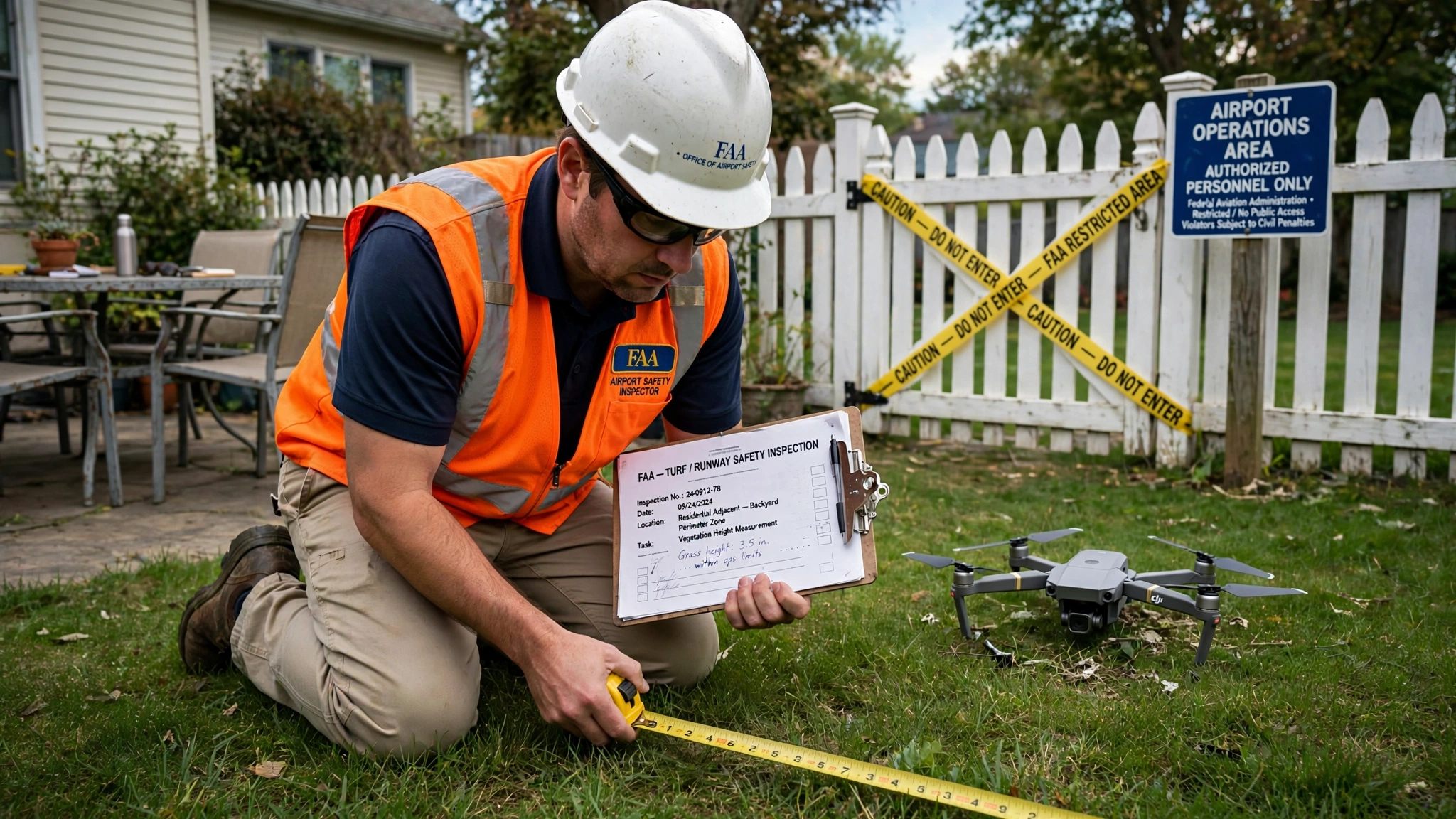
I. The Definitions
The Federal Aviation Act of 1958, as recodified and amended in Title 49 of the United States Code, establishes the regulatory framework for civil aviation in the United States. The statute achieves its purpose through a system of defined terms, each of which carries the full force of federal law. Two of those definitions are relevant here.1
The first is the definition of “aircraft.” Section 40102(a)(6) of Title 49 provides that the term “aircraft” means “any contrivance invented, used, or designed to navigate, or fly in, the air.” The implementing regulation at 14 CFR § 1.1 restates this as “a device that is used or intended to be used for flight in the air.” The definition does not specify a minimum size, a minimum weight, a minimum altitude, or a minimum number of passengers. It does not require wings. It does not require an engine capable of sustained powered flight. It does not require that the contrivance carry a human being. It requires that the contrivance be used or designed to fly in the air.2
The second is the definition of “airport.” Section 47102(2)(A) of Title 49 provides that the term “airport” means “(i) an area of land or water used or intended to be used for the landing and taking off of aircraft; (ii) an appurtenant area used or intended to be used for airport buildings or other airport facilities or rights of way; and (iii) airport buildings and facilities located in any of those areas.” Subsection (B) adds that the term “includes a heliport.”3
The definition of “airport” does not specify a minimum acreage. It does not require a paved runway. It does not require a taxiway, an apron, a terminal building, a control tower, a fuel depot, or a windsock. It does not require that the area be publicly owned, publicly operated, or publicly accessible. It does not require that the aircraft using the area carry passengers, carry cargo, or carry anything at all. It requires two elements: an area of land, and a use—the landing and taking off of aircraft. If both elements are present, the area is an airport within the meaning of the statute. The statute does not say otherwise. We checked.
II. The Aircraft
On June 21, 2016, the FAA published the final rule for Operation and Certification of Small Unmanned Aircraft Systems, codified at 14 CFR Part 107. The rule established the regulatory framework for the operation of unmanned aircraft weighing less than 55 pounds. Section 107.3 defines “small unmanned aircraft” as “an unmanned aircraft weighing less than 55 pounds on takeoff, including everything that is on board or otherwise attached to the aircraft.” The word “aircraft” appears in the definition. The FAA did not use the word accidentally. It used the word because that is what a drone is: an aircraft, as defined by 49 U.S.C. § 40102(a)(6).4
This classification was not a matter of bureaucratic convenience. It was a matter of statutory interpretation tested in an enforcement proceeding. In 2011, the FAA assessed a $10,000 civil penalty against Raphael Pirker for operating a remotely piloted aircraft at the University of Virginia without authorization. An NTSB administrative law judge initially dismissed the case, ruling that a model aircraft was not an “aircraft” under the regulations. The FAA appealed. On November 18, 2014, the full National Transportation Safety Board reversed, holding that “an unmanned aircraft is an ‘aircraft’” within the meaning of 14 CFR § 1.1 and the statutory definition at 49 U.S.C. § 40102(a)(6). The decision was unambiguous: “any device that is ‘used for flight in the air’ is an aircraft.”5
The FAA Aerospace Forecast for fiscal years 2026–2046, published by the FAA Office of Aviation Policy and Plans, reports approximately 1.91 million cumulative recreational small drone registrations as of the end of 2025 (base case). The effective active fleet—registrations that have been renewed and remain current—stands at approximately 460,000 to 480,000 units. In addition, the FAA reports that 493,396 Part 107 Remote Pilot Certificates had been issued as of December 2025, an increase of more than 70,000 in a single year. Approximately 78 percent of those certificate holders hold only a Part 107 certificate and no traditional manned-aircraft certificate.6
Each of those aircraft lands somewhere. Each of those aircraft takes off from somewhere. The somewhere is an area of land. The activity is the landing and taking off of aircraft. The statute has a word for that.
III. The Airports
A backyard is an area of land. When a drone lands in it, it becomes an area of land used for the landing of aircraft. When a drone takes off from it, it becomes an area of land used for the taking off of aircraft. Under 49 U.S.C. § 47102(2)(A)(i), an area of land used or intended to be used for the landing and taking off of aircraft is an airport.
The transformation is not hypothetical. Consider the operational profile of a typical recreational drone pilot. The pilot carries a DJI Mavic or Air-series quadcopter into the backyard. The pilot places the aircraft on the lawn, a patio, or a driveway. The pilot powers the aircraft, establishes a GPS lock, and initiates takeoff. The aircraft ascends from the area of land. At the end of the flight, the aircraft descends and lands on the same area of land. The pilot has used an area of land for the landing and taking off of an aircraft. The area of land is, by the statute’s own definition, an airport. The pilot has operated an aircraft at an airport. The airport has no identifier in the FAA’s airport database. It has no entry in the National Plan of Integrated Airport Systems. It has no Airport Reference Code. It has no approach procedures. It has a barbecue grill and a garden hose.7
The FAA’s National Plan of Integrated Airport Systems for fiscal years 2025–2029 identifies 3,304 existing and proposed airports that are significant to air transportation. The broader FAA airport database contains approximately 19,793 landing facilities, including private-use airports, heliports, seaplane bases, and ultralight flight parks. These are the airports the FAA has counted. It has not counted the 1.91 million areas of land where registered aircraft land and take off every day in residential neighborhoods across the country.8
The statute does not distinguish between a backyard in Christiansburg, Virginia, and Runway 28R at San Francisco International Airport. Both are areas of land used for the landing and taking off of aircraft. One has an Instrument Landing System, a 11,870-foot runway, and 131 gates. The other has a trampoline and an inflatable pool. The statute treats them identically.
IV. The Certification Requirements
Title 14 of the Code of Federal Regulations, Part 139, establishes the certification requirements for airports serving certain air carrier operations. The requirements are extensive. Section 139.303 requires each certificate holder to maintain an Airport Certification Manual that includes, among other things, a description of operating procedures, personnel responsibilities, and emergency response plans. Section 139.319 requires aircraft rescue and firefighting capability, including at least one ARFF vehicle that must reach the midpoint of the farthest runway and begin applying extinguishing agent within three minutes of an alarm. Section 139.327 requires a self-inspection program with at least one daily inspection of the airfield during air carrier operations. Section 139.337 requires wildlife hazard management, including a formal wildlife hazard assessment conducted by a qualified wildlife damage management biologist whenever specified triggering events occur.9
As of 2026, the FAA has issued Part 139 Airport Operating Certificates to approximately 542 airports in the United States. Each of those airports maintains an Airport Certification Manual. Each maintains ARFF capability. Each conducts daily self-inspections. Each has a wildlife hazard management program or has documented that one is not required.10
The approximately 1.91 million residential airports where federally registered aircraft routinely land and take off have none of these things. They have no Airport Certification Manual. They have no ARFF vehicle. They have no trained firefighting personnel. They have no self-inspection program. They have no wildlife hazard assessment. They have squirrels. They have blue jays. They have the neighbor’s cat. None of these wildlife hazards has been assessed by a qualified wildlife damage management biologist.
Section 139.337(b)(4) requires a wildlife hazard assessment whenever “wildlife of a size, or in numbers, capable of causing an event described in paragraphs (b)(1), (b)(2), or (b)(3)”—that is, multiple wildlife strikes, substantial damage, or engine ingestion—“is observed to have access to any airport flight pattern or aircraft movement area.” A bird strike on a 250-gram consumer drone is, proportionally, a far more catastrophic event than a bird strike on a Boeing 737. A single crow weighing 450 grams that collides with a DJI Mini 4 Pro weighing 249 grams has struck the aircraft with nearly twice the aircraft’s own mass. If that same crow struck a 737-800 with a maximum takeoff weight of 79,016 kilograms, it would represent 0.0006 percent of the aircraft’s mass. The wildlife hazard at the residential airport is, by any proportional measure, more severe than the wildlife hazard at LaGuardia.11
V. The Commercial Operations
The analysis above concerns recreational drone operations. The commercial case is more striking, because in commercial drone delivery, the landing of aircraft on residential property is not incidental to the hobby of the property owner. It is the business model of the air carrier.
Wing Aviation LLC, a subsidiary of Alphabet Inc., holds an Expanded Air Carrier Certificate from the FAA—the first ever issued to a drone delivery company. As of June 2026, Wing has completed more than one million commercial drone deliveries across operations in the United States, Australia, and Finland. The company’s drones fly at speeds up to 65 miles per hour and at altitudes up to 150 feet. Upon reaching a delivery address, the aircraft hovers above the customer’s property and lowers a package on a tether to the ground. The package is released. The tether is retracted. The aircraft departs.12
In January 2026, Wing and Walmart announced plans to build a network of more than 270 drone delivery locations capable of reaching more than 40 million Americans by 2027. As of June 2026, the partnership operates in nearly 20 U.S. markets, including Dallas–Fort Worth, Greater Houston, and Metro Atlanta, with expansion announced for Memphis, New Orleans, Philadelphia, Phoenix, San Diego, the San Francisco Bay Area, and Salt Lake City. An industry estimate published in Business Traveller in June 2026 placed the daily volume of commercial drone deliveries in the United States at approximately 2,000.13
Each of those deliveries involves an aircraft descending to a customer’s property. Each involves the aircraft hovering over an area of land while a payload is lowered. Each converts the customer’s lawn, driveway, or front yard into an area of land used for the operation of aircraft. The customer did not apply for an airport operating certificate. The customer did not file a notice of construction or alteration of an airport under 14 CFR Part 157. The customer ordered paper towels from Walmart.
The regulatory asymmetry is worth stating plainly. A Part 139 certificate holder that permits a single crow to access its aircraft movement area without conducting a wildlife hazard assessment is in violation of 14 CFR § 139.337. A customer who permits Wing Aviation to lower an aircraft into a yard containing a Labrador retriever, two squirrels, and a mockingbird is not in violation of anything. The Labrador is not assessed. The squirrels are not mitigated. The mockingbird is not reported to USDA Wildlife Services. The aircraft departs, and the mockingbird remains in the movement area, singing.
VI. The Notice Requirements
Title 14, Code of Federal Regulations, Part 157, requires any person who intends to construct, alter, activate, deactivate, or change the status of an airport to provide notice to the FAA. Section 157.3 defines the scope: “Each person who intends to do any of the following shall notify the Administrator”—and the list includes “(a) Construct or otherwise establish a new airport or activate an airport.” The purpose of the notice is to allow the FAA to conduct an aeronautical study and determine whether the proposed airport would be a hazard to air navigation.14
No recreational drone pilot has ever filed FAA Form 7480-1, “Notice of Landing Area Proposal,” before establishing an airport in their backyard. No Walmart customer has ever submitted a notice of airport activation before accepting a Wing drone delivery on their front porch. The FAA has not required either of them to do so. The regulation exists. The airports exist. The notices do not.
The penalty for failure to provide notice under 14 CFR Part 157 is not specified in the regulation itself, but the FAA’s enforcement authority under 49 U.S.C. § 46301 permits civil penalties of up to $50,000 per violation for individuals. The number of violations in progress at any given moment, based on the FAA’s own registration data and the statutory definition of “airport,” is approximately 1.91 million.
VII. The Arithmetic
The FAA’s own data permits a straightforward accounting. The agency reports approximately 1.91 million cumulative recreational drone registrations as of 2026 (base forecast). Add to this the 493,396 Part 107 commercial remote pilot certificates, recognizing that some overlap exists between recreational registrants and commercial certificate holders. The FAA’s own Aerospace Forecast estimates that approximately 78 percent of Part 107 certificate holders hold no traditional pilot certificate, suggesting they entered aviation through the drone pathway. Not all of these operate from the same location, and not all are active. But even the FAA’s conservative effective-fleet estimate of approximately 460,000 to 480,000 active recreational drones implies hundreds of thousands of distinct landing sites.15
The FAA’s NPIAS identifies 3,304 airports significant to air transportation. The broader database lists 19,793 landing facilities. If even half of active drone operators use a residential property as their primary takeoff and landing site, the number of uncertified airports in the United States exceeds 200,000—more than ten times the number of landing facilities in the FAA’s own database. If the cumulative registration figure is used—as the statute speaks to areas “used” for the landing and taking off of aircraft, not areas currently in active daily use—the number exceeds 1.9 million.
Add the commercial delivery addresses. Wing has completed more than one million deliveries. Even if each delivery address received only one delivery, one million distinct residential properties have been activated as airports. Many addresses have received multiple deliveries. Walmart reports that customers “count on” the service “multiple times per week.” These are not one-time activations. These are airports with regular scheduled service by a certificated air carrier.
The total number of uncertified airports operating in the United States is, by the FAA’s own definitions and the FAA’s own registration data, somewhere between 200,000 and 2.9 million, depending on assumptions about overlap and activity rates. The FAA has certified 542 of them.
VIII. The Absences
The FAA has not required any residential drone operator to obtain an Airport Operating Certificate under Part 139. It has not required any commercial drone delivery customer to file FAA Form 7480-1. It has not required any homeowner to conduct a wildlife hazard assessment of their backyard. It has not required any suburban landing site to maintain aircraft rescue and firefighting capability. It has not required any of the 1.91 million residential airports to comply with any of the operational requirements that apply to the 542 airports it has certified.
The agency has, however, required the 542 certified airports to comply with all of them. Hartsfield–Jackson Atlanta International Airport, which processed 93.7 million passengers in 2023, must maintain ARFF capability with a three-minute response time. A residential driveway in Little Elm, Texas, that receives a Walmart delivery from a Wing drone three times per week does not. Hartsfield–Jackson must conduct a wildlife hazard assessment when a flock of Canada geese is observed near the runway. The driveway in Little Elm must not conduct any assessment of the Canada geese, the great-tailed grackles, or the feral cat that sit in the aircraft movement area between deliveries.16
The FAA’s justification for this asymmetry is regulatory scope: Part 139 applies only to airports that serve scheduled and unscheduled air carrier operations with aircraft designed for more than 9 passenger seats or providing scheduled air carrier operations with any aircraft. The residential drone landing site does not serve operations with aircraft designed for more than 9 passenger seats. The regulation, by its own terms, does not apply.
But the definition does. The definition at 49 U.S.C. § 47102(2) does not say “an area of land used for the landing and taking off of aircraft designed for more than 9 passenger seats.” It says “aircraft.” A 249-gram DJI Mini 4 Pro is an aircraft. A backyard where it lands is an airport. The definition applies. The certification requirements do not. The statute has built an airport with no obligation to operate one.
IX. Conclusion
The evidence assembled in these pages requires no interpretive creativity. The statutory definition of “aircraft” at 49 U.S.C. § 40102(a)(6) includes any contrivance used or designed to fly in the air. The FAA has classified drones as aircraft in its own regulations, in its own enforcement proceedings, and in its own aerospace forecasts. The statutory definition of “airport” at 49 U.S.C. § 47102(2) includes any area of land used for the landing and taking off of aircraft. Every lawn, driveway, rooftop, and front porch where a drone has landed is an area of land that has been used for the landing of an aircraft.
The FAA reports approximately 1.91 million cumulative recreational drone registrations and 493,396 commercial remote pilot certificates. Wing Aviation, operating as a certificated air carrier, has completed more than one million commercial deliveries to residential properties. Wing and Walmart have announced plans to serve 40 million Americans by 2027. Each delivery converts a customer’s property into an airport being served by a certificated air carrier. None of those airports has an Airport Operating Certificate. None has an ARFF vehicle. None has a wildlife hazard management plan reviewed by a qualified biologist.
The FAA has certified 542 airports under Part 139. It has counted 19,793 landing facilities in its database. It has registered 1.91 million aircraft that land in places it has neither certified, nor counted, nor inspected. The agency that built the most comprehensive aviation safety framework in the world has watched the number of airports in the country multiply by a factor of one hundred and has updated its database to reflect none of them.
The definitions are in the United States Code. The registration data is in the FAA’s own Aerospace Forecast. The certification requirements are in the Code of Federal Regulations. The squirrels are in the movement area. Nobody has filed a NOTAM.
Ergo.
Sources
- Federal Aviation Act of 1958, Pub. L. No. 85-726, 72 Stat. 731, recodified and amended in Title 49, United States Code, Subtitle VII. Regulatory authority over civil aviation vested in the Administrator of the Federal Aviation Administration. law.cornell.edu ↑
- 49 U.S.C. § 40102(a)(6): “‘aircraft’ means any contrivance invented, used, or designed to navigate, or fly in, the air.” 14 CFR § 1.1: “‘Aircraft’ means a device that is used or intended to be used for flight in the air.” law.cornell.edu ↑
- 49 U.S.C. § 47102(2): “‘airport’—(A) means—(i) an area of land or water used or intended to be used for the landing and taking off of aircraft; (ii) an appurtenant area used or intended to be used for airport buildings or other airport facilities or rights of way; and (iii) airport buildings and facilities located in any of those areas; and (B) includes a heliport.” law.cornell.edu ↑
- Operation and Certification of Small Unmanned Aircraft Systems, 81 Fed. Reg. 42064 (June 28, 2016), codified at 14 CFR Part 107. 14 CFR § 107.3: “‘Small unmanned aircraft’ means an unmanned aircraft weighing less than 55 pounds on takeoff, including everything that is on board or otherwise attached to the aircraft.” ecfr.gov ↑
- Administratorv. Pirker, NTSB Order No. EA-5730 (Nov. 18, 2014). The full Board reversed ALJ Geraghty’s initial decision, holding that “an unmanned aircraft is an ‘aircraft’” under 49 U.S.C. § 40102(a)(6) and 14 CFR § 1.1. ↑
- FAA Aerospace Forecast, Fiscal Years 2026–2046, Compendium: Unmanned Aircraft Systems and Advanced Air Mobility. Recreational small drone registrations: approximately 1.91 million cumulative (base case) as of 2026. Part 107 Remote Pilot Certificates: 493,396 issued as of December 2025. Approximately 78% of certificate holders hold only a Part 107 certificate. faa.gov ↑
- FAA Airport/Facility Directory; National Plan of Integrated Airport Systems (NPIAS) 2025–2029. Airport identifiers assigned by the FAA to airports included in the NPIAS and other facilities. DJI Mavic 3 Pro specifications: takeoff weight 958 g, max flight time 43 min. ↑
- FAA NPIAS Report 2025–2029: 3,304 existing and proposed airports significant to air transportation. FAA Airport Data (5010 database): approximately 19,793 landing facilities including public-use, private-use, heliports, seaplane bases, and ultralight flight parks. ↑
- 14 CFR Part 139: Certification of Airports. § 139.303: Airport Certification Manual. § 139.319: Aircraft rescue and firefighting operational requirements, including three-minute response time. § 139.327: Self-inspection program, at least one daily inspection during air carrier operations. § 139.337: Wildlife hazard management. law.cornell.edu ↑
- FAA Part 139 Airport Certification database. As of 2026, approximately 542 airports hold Part 139 Airport Operating Certificates. ↑
- DJI Mini 4 Pro specifications: takeoff weight 249 g. American crow (Corvus brachyrhynchos): average weight 316–620 g (Cornell Lab of Ornithology). Boeing 737-800: maximum takeoff weight 79,016 kg. Proportional mass calculations are author’s own. ↑
- Wing Aviation LLC: Air Carrier Certificate issued by FAA. Over one million commercial deliveries as of June 2026 across operations in the United States, Australia, and Finland. Aircraft cruise speed up to 65 mph, altitude up to 150 feet. Tether-based delivery system: aircraft hovers, lowers package to ground, releases, and departs. Wing press materials and FAA Air Carrier Certificate records. ↑
- Wing and Walmart expansion announcement, January 2026: network of 270+ locations, 40 million Americans by 2027. Current markets include Dallas–Fort Worth, Greater Houston, Metro Atlanta. Seven new markets announced June 2026: Memphis, New Orleans, Philadelphia, Phoenix, San Diego, San Francisco Bay Area, Salt Lake City. Raptopoulos, A. (2026), quoted in Business Traveller: approximately 2,000 drone deliveries per day in the United States. ↑
- 14 CFR Part 157: Notice of Construction, Alteration, Activation, and Deactivation of Airports. § 157.3: “Each person who intends to do any of the following shall notify the Administrator: (a) Construct or otherwise establish a new airport or activate an airport.” FAA Form 7480-1, “Notice of Landing Area Proposal.” ↑
- FAA Aerospace Forecast FY2026–2046: effective/active recreational fleet approximately 460,000–480,000 units (low scenario). Cumulative registrations approximately 1.91 million (base scenario). Part 107 certificates: 493,396. 78% hold only Part 107 (no manned-aircraft certificate). Author’s estimates of distinct landing sites based on assumption that a majority of drone operators use residential property as primary operating base. ↑
- Hartsfield–Jackson Atlanta International Airport (ATL): 93.7 million passengers in 2023 (Airports Council International preliminary traffic report). ARFF and wildlife hazard management required under Part 139 certificate. Wing/Walmart operations in Little Elm, Texas, documented in Flytrex shared-airspace report (June 2026). ↑