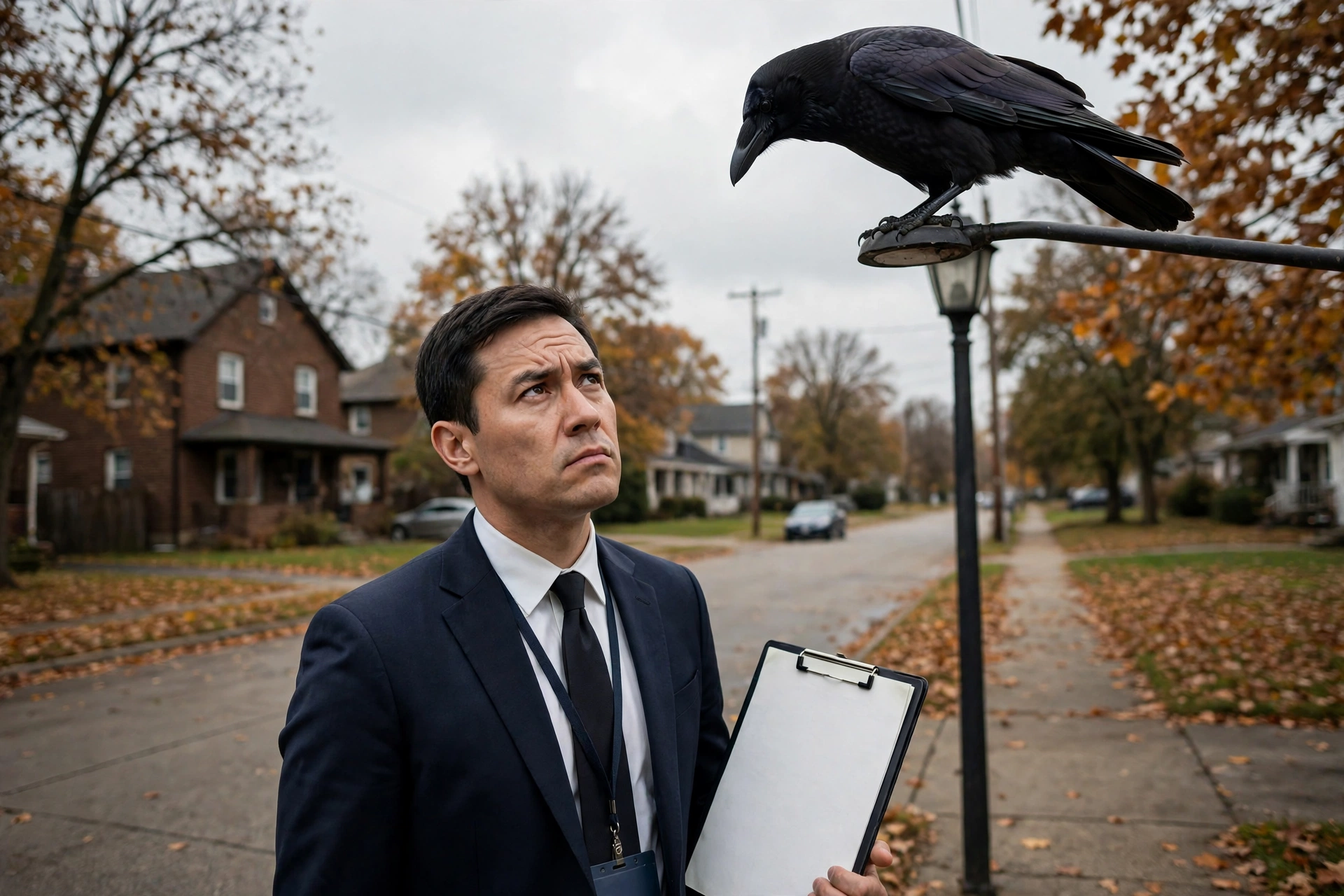
I. The Statute
The Illinois Biometric Information Privacy Act, codified at 740 ILCS 14, was enacted in 2008 and took effect on October 3 of that year. It was the first statute in the United States to regulate the private collection of biometric data, and it remains the only one enforced primarily through a private right of action rather than through a regulator. The legislature stated its findings in Section 5: biometrics are biologically unique to the individual, and once compromised, the individual has no recourse, because a face cannot be reissued the way a Social Security number can.1
Section 14 of the Act defines the regulated material. A "biometric identifier" means a retina or iris scan, a fingerprint, a voiceprint, or a scan of hand or face geometry.2 A "private entity" means any individual, partnership, corporation, limited liability company, association, or other group, however organized, excluding state and local government agencies and the courts.3 A "written release" means informed written consent, or, in the context of employment, a release executed by an employee as a condition of employment.4
Section 15 then imposes five duties. Subsection (a) requires a private entity in possession of biometric identifiers to develop a written policy, made available to the public, establishing a retention schedule and guidelines for permanently destroying the identifiers when the initial purpose for collecting them has been satisfied or within three years of the individual's last interaction with the entity, whichever occurs first.5 Subsection (b) provides that no private entity may collect, capture, purchase, receive through trade, or otherwise obtain a person's biometric identifier unless it first informs the subject in writing that an identifier is being collected or stored, informs the subject in writing of the specific purpose and length of term for which it will be collected, stored, and used, and receives a written release executed by the subject.6 Subsection (c) prohibits selling, leasing, trading, or otherwise profiting from a biometric identifier. Subsection (d) prohibits disclosing or redisclosing it unless the subject consents, disclosure is required by law, or another narrow exception applies. Subsection (e) requires the entity to store, transmit, and protect the identifier using the reasonable standard of care within its industry, and in a manner at least as protective as its treatment of other confidential information.7
Section 20 supplies the enforcement mechanism. Any person aggrieved by a violation has a right of action in state circuit court or as a supplemental claim in federal court. A prevailing party may recover, for each violation, liquidated damages of $1,000 for a negligent violation or $5,000 for an intentional or reckless violation, or actual damages if greater, plus reasonable attorneys' fees, costs, expert witness fees, and any other relief the court deems appropriate, including an injunction.8 No agency enforces the Act. Enforcement depends entirely on aggrieved persons filing suit. No aggrieved person has ever filed suit against a crow.
II. The Database
The database was built on the campus of the University of Washington, beginning in 2006, by the wildlife biologist John Marzluff and his students. The researchers wore a unique rubber caveman mask while they trapped, banded, and released 7 to 15 American crows at five study sites near Seattle. They then walked the same routes wearing either the dangerous mask or one of several neutral masks, and recorded which mask the crows scolded.9
The results were published in 2010 in the journal Animal Behaviour, under the title "Lasting recognition of threatening people by wild American crows." Wild Corvus brachyrhynchos learned to link a specific human face to a bad experience, then kept scolding that face for at least 2.7 years after a single encounter. The crows scolded and mobbed people of different sizes, ages, genders, and walking gaits who wore the dangerous mask, even when the wearer stood in a crowd. Before trapping, few crows scolded the dangerous mask. After trapping, few crows scolded trappers who wore no mask or who wore a mask that had not been worn during trapping. The birds discriminated the dangerous face from neutral faces with precision, and they did so without any device, any software, and any written policy.10
The important point for the statute is what the crows actually stored. They did not store a general impression of danger. They stored a specific face, distinguished it from other faces, and retrieved it on sight across years, across wearers, and across contexts. A commercial facial recognition system that performed at this level, distinguishing a target face from control faces in a crowd after a single enrollment, would be described in its marketing material as state of the art. The crows performed it with a brain the size of a walnut and no enrollment form at all.11
III. The Network
A database that only its original collectors can query is a small problem. The crows solved that problem the way every successful surveillance network does: they shared access. A second peer-reviewed paper, published in 2012 in the Proceedings of the Royal Society B, documented that knowledge of a dangerous person spreads among American crows by social learning, horizontally to other adults and vertically to offspring.12
Crows that were not captured learned the dangerous face by watching the mob that assembled during a capture. Young birds hatched after trapping was concluded observed their parents scolding the mask and joined in, scolding independently even when their parents were absent. Over five years at one site, scolding doubled in frequency and spread at least 1.2 kilometers from the place of origin. Scolding vocalizations directed at the dangerous mask typically attracted a mob: 82 percent of 126 scolding events drew additional birds, mobs averaged 6.4 crows, and most of the birds identified scolding had not themselves been trapped by a person wearing the dangerous mask.13
Each scolding event is, in the language of the statute, a disclosure. The identifier is announced, loudly, to every bird within earshot, and the announcement recruits new holders of the identifier. On one later walk described in Marzluff's account of the experiment, 47 of the 53 crows encountered scolded the dangerous mask, far more than the seven originally trapped. The system does not merely retain data. It evangelizes it.14
IV. The Retention Schedule That Was Never Written
Section 15(a) gives a private entity two deadlines, whichever comes first: destroy the identifier when the initial purpose for collecting it has been satisfied, or within three years of the individual's last interaction with the entity. The crows have missed both.
The initial purpose of the crows' collection was avoiding the trapper. The trapping ended. The researchers stopped wearing the mask to trap birds and wore it only to walk. The purpose was satisfied years ago, and the record was not destroyed. The peer-reviewed floor for retention is 2.7 years, already approaching the statute's three-year outside limit. The long-running account of the experiment extends far beyond it: the scolding response peaked around 2013, about seven years after the original trapping, remained elevated for years, and only faded when the original birds died and their taught descendants aged out. By September 2023, roughly seventeen years after the experiment began, a masked walk across the same campus drew no scolding at all.15
Seventeen years exceeds the statute's three-year destruction deadline by fourteen years, on the author's arithmetic.16 Worse, from the statute's perspective, the retention outlived the collectors themselves. The original seven trapped birds died during the study period, and the record survived them, carried by offspring that had never been trapped and never met the trapper. No retention schedule can be said to have been followed when the data outlives the entity that collected it and passes to the next generation by instruction. And no written policy establishing any schedule has ever been made available to the public, because crows publish nothing. The retention schedule is unwritten, the destruction guidelines are nonexistent, and the destruction itself has never occurred except by death and forgetting, which the statute does not list as a method of compliance.
V. The Consent File That Is Empty
Section 15(b) requires three things before collection: written notice that an identifier is being collected, written notice of the specific purpose and length of term, and a written release executed by the subject. The crows' compliance file contains none of the three.
No crow has ever informed a subject in writing that a biometric identifier is being collected. Crows cannot write, which is a practical obstacle but not a legal defense the statute recognizes: the statute contains no illiteracy exception, no beak exception, and no exception for collectors that communicate exclusively by vocalization. The only notice a subject receives from the system is the scolding itself, which is notification that identification has already occurred, not that collection is about to begin. It is the equivalent of a company informing you that it has your face by pointing at you and shouting.
No crow has ever stated a specific purpose and length of term in writing. No crow has ever received a written release. The researchers whose faces were enrolled did not execute releases; they were the ones conducting the experiment, and even their participation does not constitute a release for the thousands of crows that later received the identifier secondhand. Every subsequent holder of the record, every crow that learned the face from a parent or a mob, collected it without any release at all. The consent file is not incomplete. It is empty, and it has been empty for every day of a retention period now measured in decades.17
VI. The Disclosure Chain
Section 15(d) prohibits disclosure of a biometric identifier unless the subject consents or a narrow exception applies, and the Illinois Supreme Court's decision in Cothron v. White Castle System, Inc., 2023 IL 128004, held that a claim under the Act accrues with every scan or transmission of a biometric identifier without prior informed consent. Each scolding event, on this reading, is a fresh transmission to a fresh set of recipients.18
The legislature responded to Cothron in 2024. On August 2, 2024, the governor signed Senate Bill 2979, which provides that a private entity that more than once obtains the same biometric identifier from the same person using the same method of collection has committed a single violation, for which the aggrieved person is entitled to at most one recovery. The same single-recovery rule applies to repeated disclosures of the same identifier to the same recipient using the same method.19
The crows defeat both halves of the amendment by the same maneuver. The amendment caps repeat collections by the same entity and repeat disclosures to the same recipient. The crow system never repeats with the same entity or the same recipient, because it constantly recruits new ones. Each chick that learns the face is a new collector. Each mob that gathers around a scolding bird is a new set of recipients. The single-recovery rule is a cap on a system that scans the same person the same way forever. The crows scan the same person in new birds forever, which is not the same way, and not the same bird, and not the same recipient, and therefore not capped. The legislature wrote a rule for a turnstile. The crows operate a franchise.20
Section 15(c) prohibits profiting from a biometric identifier. The crows profit in the only currency that matters to them: the information keeps them alive. A crow that recognizes a trapper avoids the trap. A crow that teaches its chicks to recognize the trapper extends that avoidance past its own death. The statute does not accept survival as a form of profit, but it also does not exempt it. No crow has ever sold a face, which is the one subsection the system arguably satisfies, and it satisfies it only because no crow has ever discovered commerce.21
VII. The Quantification
Section 20 sets the price. A negligent violation costs $1,000. An intentional or reckless violation costs $5,000. The crows' violations are not negligent: the system scolds deliberately, repeatedly, and in public, after years of demonstrated accuracy. At the intentional-violation rate, the single walk on which 47 of 53 crows scolded the dangerous mask represents $235,000 in liquidated damages, on the author's arithmetic, for one walk, for one face, with no written release on file.22
The scale of the deployment dwarfs the experiment. The Partners in Flight Avian Conservation Assessment Database, as reported by the National Audubon Society, estimates the American crow population of the United States and Canada at 28,000,000 birds.23 Every one of them is capable of the same enrollment, the same retention, and the same disclosure, and none of them has ever executed a compliance policy. The number of written releases in the entire system is zero. The number of faces enrolled is unknown, because the system keeps no inventory, which is itself a further failure of record-keeping that the statute does not separately punish only because the legislature never imagined a filing system made of birds.
The system also gathers in numbers that commercial operators envy. Winter roosts of American crows sometimes number in the hundreds of thousands of birds, assembled nightly in a single location, each bird carrying its own copy of every face it has learned.24 A commercial data center with hundreds of thousands of nodes holding unconsented biometric records would be the largest enforcement target in the history of the statute. The crows hold the same architecture in trees, and no plaintiff has ever served one.
VIII. The Illinois Nexus
The statute is an Illinois statute, and the question of jurisdiction is fair. The mask experiments were conducted in Washington, not Illinois. But the regulated system is not the experiment. It is the species, and the species operates in Illinois at full capacity.
American crows can be found all year in Illinois, appearing in 24 percent of summer checklists and 29 percent of winter checklists for the state, and they are common in almost every Illinois habitat: woodlands, fields, rivers, marshes, farms, parks, landfills, golf courses, cemeteries, and neighborhoods.25 The behavior documented in Seattle, individual facial recognition, multi-year retention, and social transmission to unexposed birds, is a property of the species, not of the campus. There is no Illinois crow exemption in the literature, and no study suggesting that Illinois crows, uniquely among American crows, forget faces, obtain releases, or publish retention schedules.
Illinois, meanwhile, has produced the richest biometric privacy jurisprudence in the country: the Cothron accrual rule, the 2024 single-recovery amendment, and a docket of class actions that has cost commercial defendants hundreds of millions of dollars. The state's courts have refined the law of face geometry to a fine edge, and they have never applied it to the largest face-geometry operation in the state, which operates over every courthouse, every legislature, and every plaintiff's firm in Illinois, daily, without a policy.
IX. The Objection
Three objections present themselves, and intellectual honesty requires stating them plainly. First, the statute binds "private entities," defined as individuals, partnerships, corporations, limited liability companies, associations, or other groups, however organized. A crow is none of these in any sense the legislature used, and the definition expressly excludes government agencies and courts, which suggests the legislature was thinking about organizations, not animals.26 Second, the statute's "scan of face geometry" contemplates a technological process, and related definitions exclude photographs and physical descriptions from the regulated categories; a crow's memory is arguably closer to a description than to a scan.27 Third, the crows' purpose is not commercial. They collect faces to survive, not to sell advertising, and the statute's findings dwell on the commercial exploitation of biometrics.
These objections have never been tested, because no case has ever been filed, no regulator has ever opened an inquiry, and no crow has ever been served. The objections also miss the statute's stated concern, which is control: Section 5 finds that individuals must retain control over their biometric identifiers because the consequences of losing control are incapable of ascertainment. No entity in Illinois exercises less accountable control over more faces than the crow population. A person who wrongs a crow in Seattle in 2006 is still being identified by descendants of that crow's flock nearly two decades later, and the person cannot opt out, cannot request deletion, cannot review the record, and cannot appeal to any retention schedule, because none exists. The objection that crows are not private entities is, in the end, an objection that the statute failed to imagine its largest violator. That is a defect in the statute, not an acquittal of the birds.
X. Conclusion
The Illinois Biometric Information Privacy Act requires a written release before collection, a public retention schedule, destruction within three years of the last interaction, and reasonable care in storage and transmission, and it prices intentional violations at $5,000 each. The American crow collects individual human faces without any release, retains them for at least 2.7 years by peer-reviewed measurement and up to seventeen years by the university's own long-running account, discloses them to mobs averaging 6.4 birds, transmits them vertically to offspring and horizontally to strangers, defeats the legislature's single-recovery cap by recruiting new collectors and new recipients, and has never published a policy, executed a release, or destroyed a record.
The population of the system is 28,000,000 birds in the United States and Canada. The number of written releases is zero. The number of enforcement actions is zero. The number of faces enrolled is unknown, because the system keeps no inventory. The statute does not contain a crow exemption. The regulations do not contain a crow exemption. The case law does not contain a crow exemption. The legislature amended the Act in 2024 to limit the damages of commercial defendants, and it did not mention the birds, which continue to operate the largest unregistered biometric surveillance network in Illinois, in every neighborhood, in every season, over every head, without a single piece of paper.
It should not.
Ergo.
Sources
- Illinois Biometric Information Privacy Act, 740 ILCS 14/5, legislative findings; P.A. 95-994, effective October 3, 2008. ilga.gov ↑
- 740 ILCS 14/14, definition of "biometric identifier": "a retina or iris scan, fingerprint, voiceprint, or scan of hand or face geometry." ilga.gov ↑
- 740 ILCS 14/14, definition of "private entity": "any individual, partnership, corporation, limited liability company, association, or other group, however organized," excluding state and local government agencies and Illinois courts. law.justia.com ↑
- 740 ILCS 14/14, definition of "written release": "informed written consent," including electronic signature as amended in 2024. ilga.gov ↑
- 740 ILCS 14/15(a): a private entity in possession of biometric identifiers "must develop a written policy, made available to the public, establishing a retention schedule and guidelines for permanently destroying" them when the purpose has been satisfied or within 3 years of the individual's last interaction, whichever occurs first. ilga.gov ↑
- 740 ILCS 14/15(b): no private entity may obtain a biometric identifier unless it first informs the subject in writing that one is being collected or stored, informs the subject in writing of the specific purpose and length of term, and receives a written release executed by the subject. ilga.gov ↑
- 740 ILCS 14/15(c), (d), and (e): no sale, lease, trade, or profit; no disclosure except with consent or under a narrow exception; storage and protection using the reasonable standard of care within the entity's industry. ilga.gov ↑
- 740 ILCS 14/20: private right of action; liquidated damages of $1,000 per negligent violation or $5,000 per intentional or reckless violation, or actual damages if greater, plus reasonable attorneys' fees, costs, expert witness fees, and injunctive relief. lawreportgroup.com ↑
- J. M. Marzluff et al., "Lasting recognition of threatening people by wild American crows," Animal Behaviour, 2010: wild crows exposed to a novel dangerous face by researchers wearing a unique mask while trapping, banding, and releasing 7 to 15 birds at five sites near Seattle. researchgate.net ↑
- Marzluff et al. 2010: crows "quickly and accurately" learned to recognize the face of a dangerous person and continued to do so "for at least 2.7 years"; after trapping, crows scolded and mobbed people of different sizes, ages, genders, and walking gaits wearing the dangerous mask, even in crowds, while rarely scolding unmasked trappers or neutral masks. researchgate.net ↑
- Author's application of footnotes 9 and 10: the discriminative performance described, distinguishing one face from control faces in a crowd after a single enrollment, is the function a commercial facial recognition system performs. ↑
- H. N. Cornell, J. M. Marzluff, and S. Pecoraro, "Social learning spreads knowledge about dangerous humans among American crows," Proceedings of the Royal Society B, vol. 279, 2012, pp. 499-508: crows use individual and social information to learn facial features of a dangerous person; later recognition by lone uncaptured crows indicates horizontal social learning, and independent scolding by young crows indicates vertical social learning. pmc.ncbi.nlm.nih.gov ↑
- Cornell et al. 2012: learning "enabled scolding to double in frequency and spread at least 1.2 km from the place of origin over a 5 year period at one site"; scolding vocalizations typically (82% of 126 events) attracted a mob averaging 6.4 crows, and most identified scolding birds had not been trapped by a person wearing the dangerous mask. researchgate.net ↑
- Marzluff's later account of the experiment: on one masked walk, 47 of the 53 crows encountered scolded the dangerous mask, far more than the seven originally trapped. morningoverview.com ↑
- University of Washington long-running account of the experiment, reported 2024: the scolding response peaked around 2013, about seven years after the original trapping, then declined as the original birds died and taught descendants aged out; by September 2023, roughly seventeen years after the experiment began, a masked walk drew no scolding. The peer-reviewed floor remains 2.7 years (footnote 10); the seventeen-year arc is the university's account, not a peer-reviewed finding. spacedaily.com morningoverview.com ↑
- Author's calculation: 17 years minus the 3-year statutory destruction deadline equals 14 years beyond the deadline. ↑
- Author's application of footnotes 5 and 6: no written notice, purpose statement, term statement, or written release from any crow appears anywhere in the published record of the experiment or in any other source. ↑
- Cothron v. White Castle System, Inc., 2023 IL 128004: a claim under the Act accrues "with every scan or transmission of biometric identifiers or biometric information without prior informed consent." insideprivacy.com ↑
- Senate Bill 2979, signed August 2, 2024: a private entity that more than once obtains the same biometric identifier from the same person using the same method of collection has committed a single violation, for which the aggrieved person is entitled to at most one recovery; the same rule applies to repeated disclosures to the same recipient. mondaq.com ↑
- Author's application of footnotes 12, 13, and 19: each new crow that learns a face is a new collector, and each new mob is a new set of recipients, so the same-entity and same-recipient limits do not describe the crow system. ↑
- Author's application of footnote 7: the crows' "profit" is survival value, not commercial revenue; no crow has ever sold a biometric identifier. ↑
- Author's calculation: 47 scolding birds multiplied by $5,000 per intentional violation equals $235,000. The count is Marzluff's account (footnote 14); the rate is Section 20 (footnote 8). ↑
- Partners in Flight Avian Conservation Assessment Database, via the National Audubon Society's Bird Migration Explorer: American crow global population 28,000,000, and United States and Canada population 28,000,000. explorer.audubon.org ↑
- Carolina Raptor Center, American Crow reference sheet: "Winter roosts of American Crows sometimes number in the hundreds of thousands." carolinaraptorcenter.org ↑
- American crows "can be found all year in Illinois," appearing in 24% of summer checklists and 29% of winter checklists for the state, and common in woodlands, fields, rivers, marshes, farms, parks, landfills, golf courses, cemeteries, and neighborhoods. birdadvisors.com birdwatchinghq.com ↑
- 740 ILCS 14/14, definition of "private entity" (footnote 3), and the express exclusion of state and local government agencies and Illinois courts. law.justia.com ↑
- The Act's definitions exclude photographs, physical descriptions, and certain health care data from the regulated categories, as summarized in contemporary legal guidance. isbamutual.com ↑